Concrete Ballast & Cement Calculator (UK)
This concrete calculator for ballast works out how many 25 kg bags of cement and how many tonnes of all-in ballast a pour needs. Enter the length, width, and depth in meters or millimeters, then pick a mix and a ballast density. The results show cement bags, ballast in tonnes and m³, and the concrete volume.
 By Muhammad AsimPublished How we calculate
Your result
- 25 kg bags of cement
- 12
- All-in ballast
- 1.61 tonnes (0.92 m³)
- Concrete with waste
- 0.99 m³ (1.29 yd³)
Formula with your numbers
0.99 m³ × 11.2 bags per m³ = 12 bags; ballast = cement volume × 5 × 1.75 t/m³ = 1.61 t
25 kg bags of cement12
How to Use the Ballast and Cement Calculator
To use the ballast and cement calculator, follow these 4 steps.
- Enter the length, width, and depth of the pour, with a unit next to each field.
- Pick the mix: 1:5 for foundations and posts, 1:4 for bases, or 1:3.5 for paths and drives.
- Pick the ballast density your supplier quotes: 1.75 or 2.0 tonnes per m³.
- Keep the 10% waste allowance or change it, then read the cement bags and ballast tonnes.
Concrete Calculator Ballast and Cement Formula
The ballast and cement formula is cement = volume × bags per m³ for the mix, and ballast = the cement volume × the ballast parts in the mix, weighed at the density you pick. The bags per m³ come from a UK DIY mix guide.
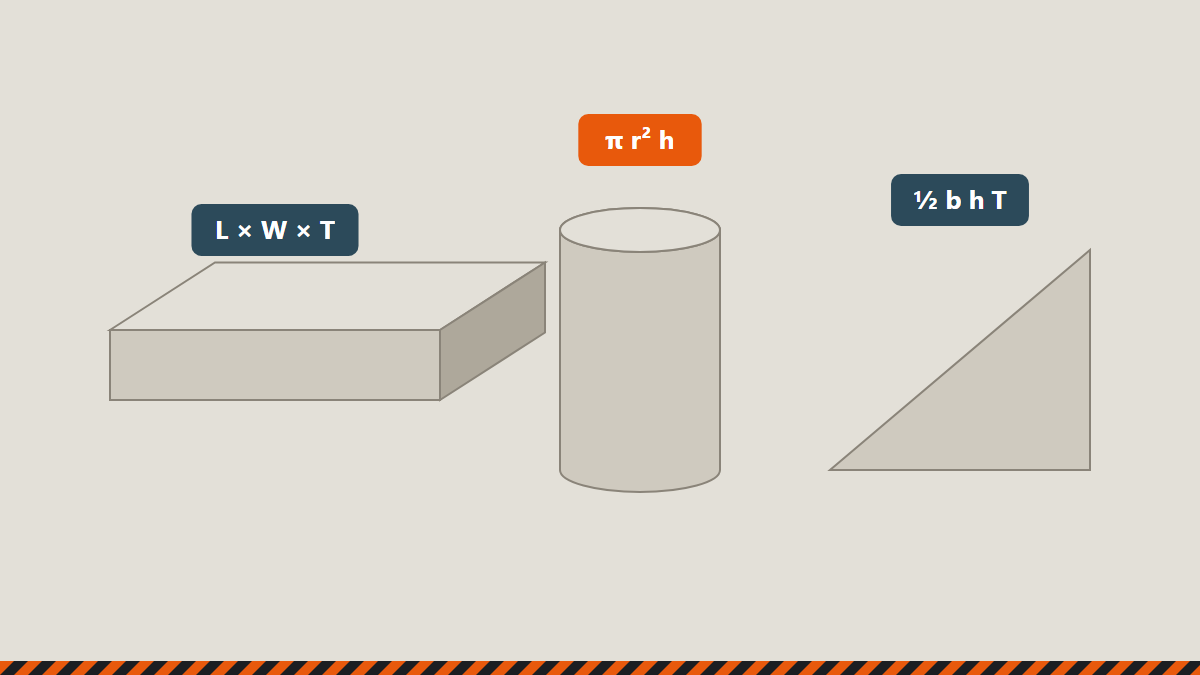
Volume (m³) = length (m) × width (m) × depth (m) × (1 + waste)
Cement bags (25 kg) = volume × bags per m³, rounded up
Ballast (m³) = cement (kg) ÷ cement density × ballast parts
Ballast (tonnes) = ballast (m³) × ballast density (t/m³)
- Bags per m³: 16 for 1:3.5, 12.8 for 1:4, and 11.2 for 1:5.
- Cement density: about 1,506 kg per m³, from the CMHA TEK 04-02A figure of 1 ft³ per 94 lb bag.
- Ballast density: the weight of 1 m³ of loose all-in ballast. Suppliers quote figures from about 1.75 to 2.0 tonnes per m³.
The imperial version uses the same mix. Multiply cubic yards by 0.7646 to get cubic meters first.
Volume (m³) = volume (yd³) × 0.7646
1 m³ = 1.308 yd³ = 35.3 ft³
Worked Example: 3 × 3 m Base at 100 mm, 1:5 Mix
A 3 × 3 m base at 100 mm (4 in) deep in a 1:5 mix needs 12 bags of 25 kg cement and 1.61 tonnes of all-in ballast at 1.75 t/m³, with 10% waste.
- Find the volume: 3 m × 3 m × 0.1 m = 0.90 m³ (1.18 yd³).
- Add 10% waste: 0.90 × 1.1 = 0.99 m³.
- Count the cement: 0.99 m³ × 11.2 = 11.09, rounded up to 12 bags of 25 kg.
- Find the ballast volume: 277.2 kg ÷ 1,506 kg/m³ × 5 = 0.92 m³.
- Weigh the ballast: 0.92 m³ × 1.75 = 1.61 tonnes, or 1.84 tonnes at 2.0 t/m³.
Where to Use the Ballast Calculator
The ballast calculator covers 3 common UK jobs, including fence posts, shed bases, and paths. The sizes below are sample inputs:
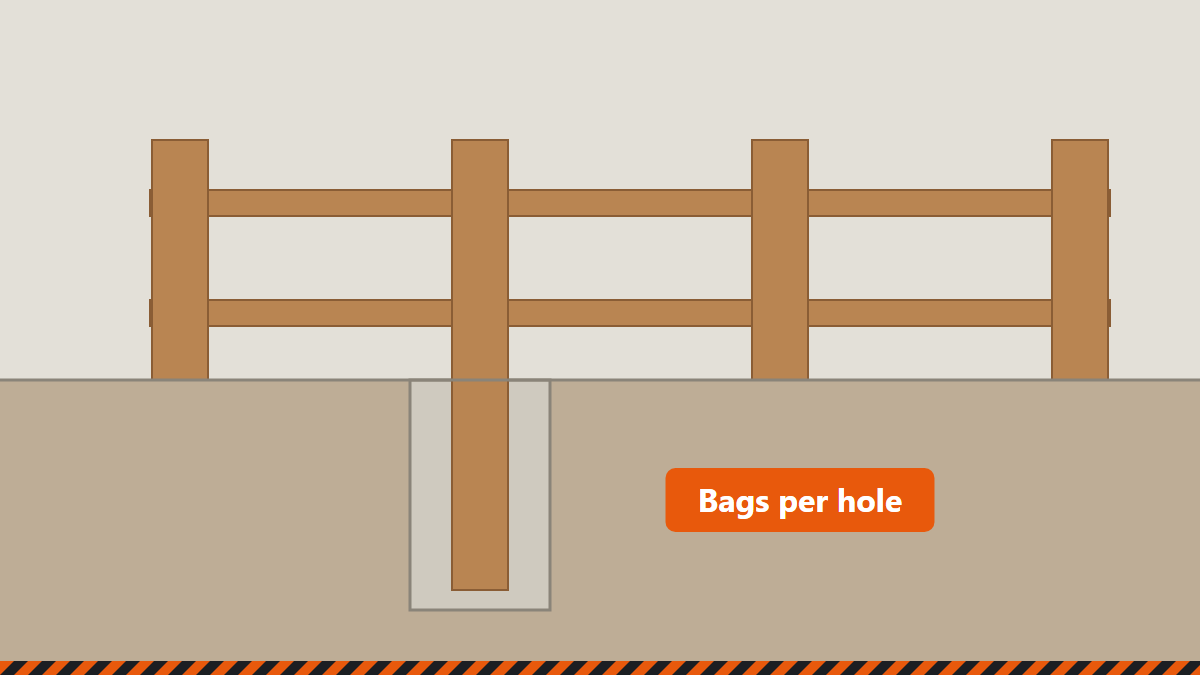
- Fence posts: 8 holes, 250 mm wide and 750 mm deep, at 1:5 need 4 bags of cement and 0.53 tonnes of ballast.
- Shed bases: a 2.4 × 1.8 m base at 100 mm, 1:4 mix, needs 7 bags of cement and 0.71 tonnes of ballast.
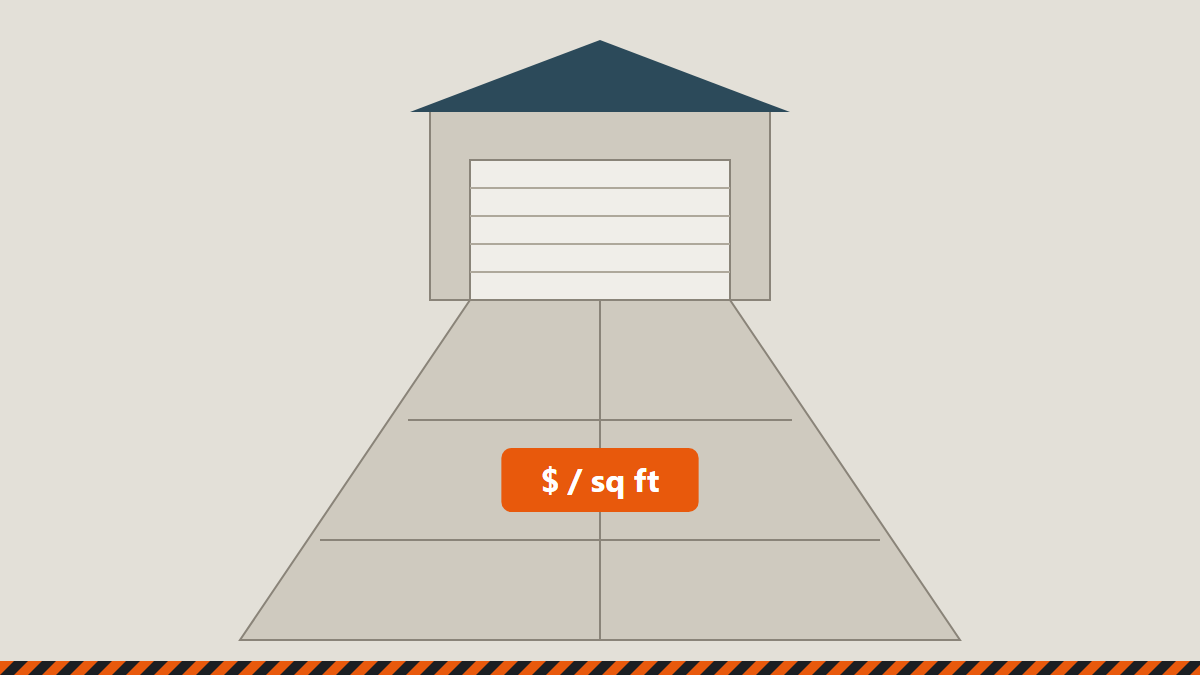
- Garden paths: a 6 m × 900 mm path at 100 mm, 1:3.5 mix, needs 10 bags of cement and 0.97 tonnes of ballast.
Cement and Ballast per 1 m³ of Concrete
To estimate cement and ballast by the cubic meter, find the mix below and multiply by your volume.
| Mix | Use | 25 kg cement bags | Ballast (m³) | Ballast (tonnes) |
|---|---|---|---|---|
| 1:3.5 | paths, drives, steps, and paving (exposed to frost) | 16 | 0.93 | 1.63 to 1.86 |
| 1:4 | shed and garage bases | 12.8 | 0.85 | 1.49 to 1.70 |
| 1:5 | foundations, footings, and fence posts | 11.2 | 0.93 | 1.63 to 1.86 |
Common Ballast Mixing Mistakes
The 3 most common ballast mistakes involve the mix, the density, and the bag count.
- Use the mix for the job. A 1:5 mix suits foundations and posts, and a path or drive exposed to frost needs the stronger 1:3.5 mix.
- Check the ballast density with your supplier. The same volume weighs about 14% more at 2.0 t/m³ than at 1.75 t/m³.
- Round cement up to whole bags, and order 5 to 10% extra for spillage and uneven ground.
Concrete Ballast & Cement Calculator (UK) FAQ
How much ballast do I need for 1 m³ of concrete?
One cubic meter of concrete in a 1:5 mix needs 1.63 to 1.86 tonnes of all-in ballast and 12 bags of 25 kg cement, before waste. The range comes from ballast densities of 1.75 to 2.0 tonnes per m³. Add 10 percent for waste, and check the density with your supplier.
What is the ratio of cement to ballast for foundations?
The usual ratio for foundations is 1 part cement to 5 parts all-in ballast, mixed by volume. The same mix suits fence posts. Shed and garage bases use 1:4, and paths, drives, and steps exposed to frost use 1:3.5. Building control or an engineer sets the mix for structural work.
How many bags of cement are in a bulk bag of ballast mix?
A 1:5 mix uses about 6.9 bags of 25 kg cement per tonne of ballast at 1.75 t/m³. Bulk bags differ in weight between suppliers, so multiply that figure by the weight printed on your bulk bag. Round up to a whole bag of cement.
Can I use sharp sand and gravel instead of ballast?
Yes, sharp sand and gravel make the same concrete when mixed separately, often at 1 part cement, 2 parts sand, and 4 parts gravel for footings. Use the sand, gravel, and cement calculator for that mix. All-in ballast is sand and gravel already blended, which saves one step on site.
Sources
Every result on this page uses plain geometry and the exact unit definitions below. The full list of formulas and constants is on the How we calculate page.
Related guides