Patio Concrete Calculator
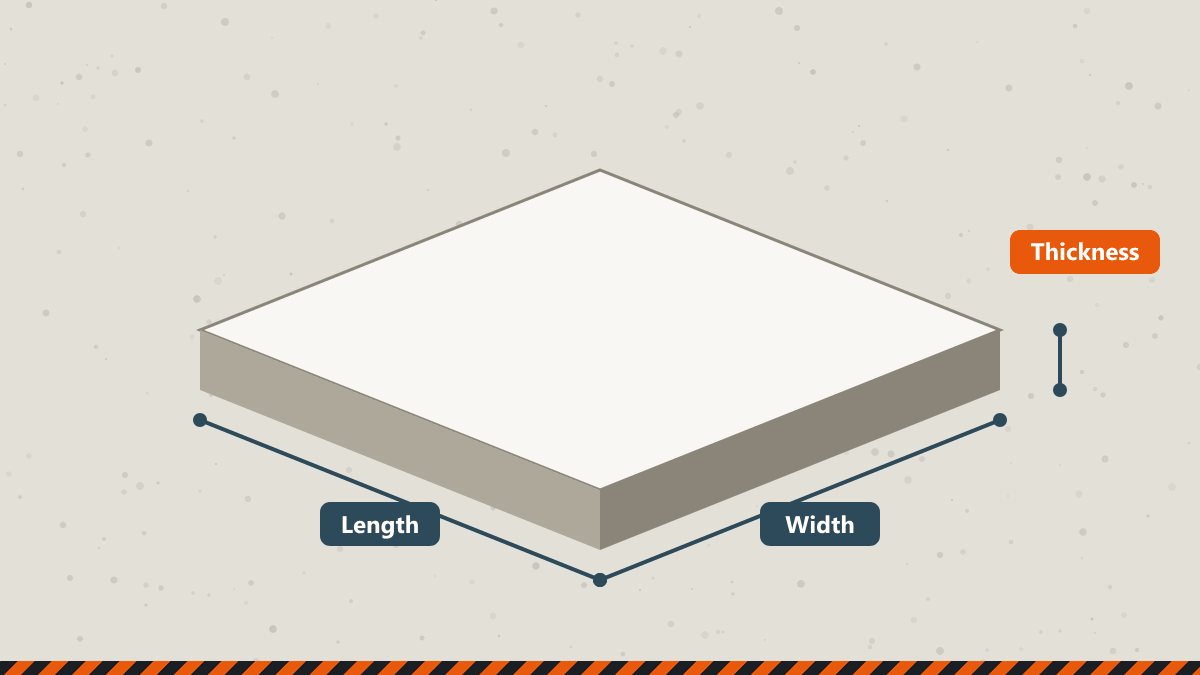
This concrete calculator for patio slabs multiplies the patio length, width, and thickness to find the concrete volume. Enter sizes in feet, inches, or meters. The results show cubic yards, cubic feet, and cubic meters, the number of 80-pound bags and 60-pound bags, weight, and cost.
 By Muhammad AsimPublished Updated How we calculate
Your estimate
Total volume with waste
1.96yd³
- Cubic meters
- 1.50 m³
- Cubic feet
- 52.8 ft³
Premixed bags
- 80 lb bags88
- 60 lb bags118
- 40 lb bags176
- 25 kg bags129
- 20 kg bags160
- Weight
- 7,911 lb · 3,588 kg
- Ready-mix truck loads (10 yd³ each)
- 0.20
- Concrete cost
Formula with your numbers
12 ft × 12 ft × 0.333 ft × 1.1 = 52.80 ft³
Includes a 10% waste allowance. Bags are rounded up. Weight uses 2,400 kg/m³ (150 lb/ft³).
Your estimate1.96 yd³ · 88 × 80 lb
Planning several pours or a cost sheet? Get the free Excel template (7 tabs, no sign-up).
How to Use the Patio Concrete Calculator
To use the patio concrete calculator, follow these 4 steps.
- Mark the outline with stakes and string, then measure it.
- Enter the thickness. Most patios are 4 inches (10 cm) thick.
- Add one section per rectangle, if the patio has an L shape or a step-down.
- Read the bag counts for a small patio or the cubic yards for a ready-mix order.
Patio Concrete Formula
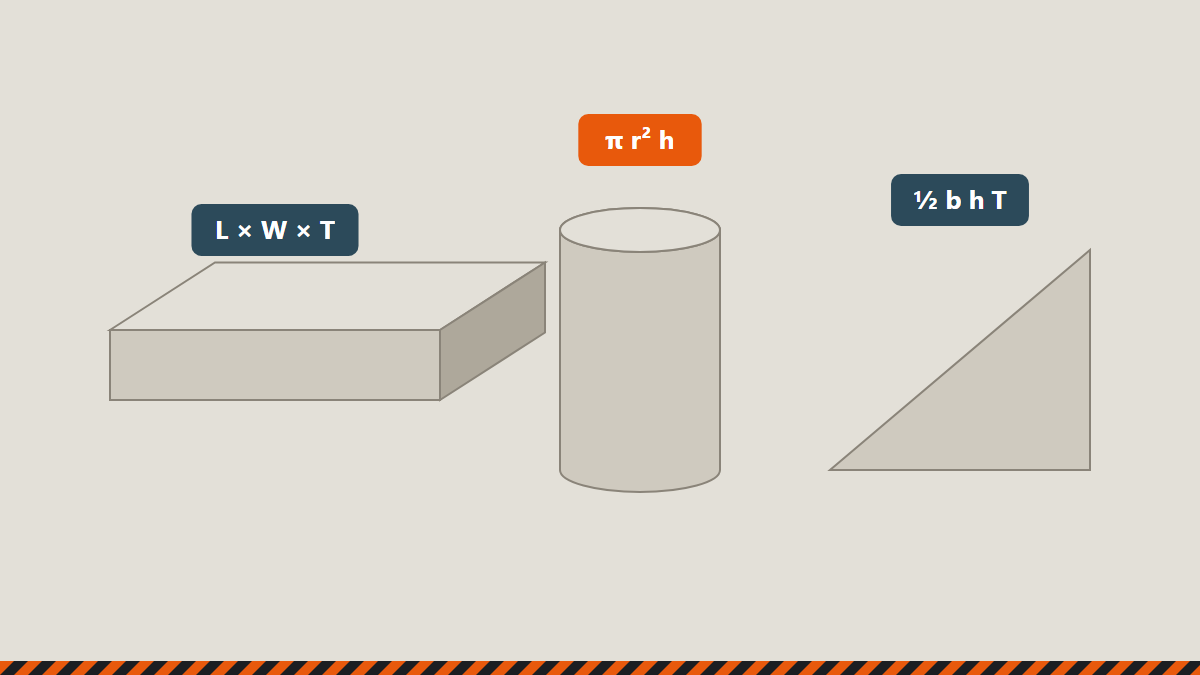
Patio concrete in cubic feet equals length × width × thickness in feet. Divide that number by 27 for cubic yards, or by 0.60 for 80 lb bags.
Volume (ft³) = length (ft) × width (ft) × thickness (in) ÷ 12
Cubic yards = volume (ft³) ÷ 27
80 lb bags = volume (ft³) ÷ 0.60, rounded up
- Length and width: the patio sides, in feet (ft).
- Thickness: the slab depth in inches (in), usually 4.
- 0.60: cubic feet that one 80 lb (36 kg) bag makes.
The metric patio formula multiplies length, width, and thickness in meters to give cubic meters (m³).
Volume (m³) = length (m) × width (m) × thickness (m)
Worked Example: 12 × 12 ft Patio at 4 Inches
A 12 × 12 ft patio at 4 inches (10 cm) thick needs 48 cubic feet, or 1.78 cubic yards (1.36 m³) of concrete.
- Find the patio area: 12 ft × 12 ft = 144 ft² (13.4 m²).
- Multiply by the thickness in feet: 144 × (4 ÷ 12) = 48 ft³.
- Convert to cubic yards: 48 ÷ 27 = 1.78 yd³.
- Add 10% for waste: 52.8 ft³, or 1.96 yd³.
- Count the bags: 52.8 ÷ 0.60 = 88 bags of 80 lb, or 118 bags of 60 lb.
Drag the sliders to size your own patio.
Try it
Drag the sliders and the diagram redraws to scale.
Linked to the calculator above: moving a slider updates your estimate.
With your values
12 ft × 12 ft × 0.333 ft = 48.00 ft³
- Cubic feet
- 48.00
- Cubic yards
- 1.78
- Cubic meters
- 1.36
Where to Use the Patio Calculator
The patio calculator suits 4 outdoor pours, including seating areas, grill pads, and hot tub pads:
- Seating patios: a 12 × 10 ft patio at 4 in needs 1.48 yd³ (1.13 m³).
- Large entertaining patios: a 20 × 20 ft patio at 4 in needs 4.94 yd³ (3.78 m³).
- Grill and smoker pads: a 6 × 6 ft pad at 4 in needs 20 bags of 80 lb concrete.
- Hot tub patios: a 10 × 10 ft pad at 6 in (15 cm) needs 1.85 yd³ (1.42 m³).
Concrete Patio Slope, Gravel Base, and Strength
A patio slopes away from the house so rainwater drains off the slab and away from the foundation. Build the fall into the forms before the pour.
A compacted gravel base sits under most patios. The calculator counts concrete only, so a 4 in gravel layer under a 12 × 12 ft patio is a separate order of 1.78 yd³ of crushed stone.
Patio concrete is usually about 3,000 pounds per square inch (psi) (20 MPa). Driveways use about 4,000 psi (28 MPa).
Concrete Patio Cost
A 4 inch concrete slab costs about $6–$12 per square foot installed in 2026, and a patio follows the same pricing. For the 12 × 12 ft patio in the worked example, concrete, labor, and reinforcement come to about $938 to $1,422, or $1,157 ($8.04 per square foot) at typical prices, before fees:
- Concrete: 1.96 yd³ with waste × $150 = $293.
- Labor and finishing: 144 sq ft × $5 = $720.
- Rebar or wire mesh: 144 sq ft × $1 = $144.
Labor is the largest line, so a do-it-yourself pour saves the most. You then buy the concrete as ready-mix or as 88 bags of 80 lb. A ready-mix order this small, under 5 yd³, adds a delivery fee of $75–$150 and a short-load fee of $40–$80.
A gravel base, a stamped or colored finish, and sealing add to the total, so get quotes for them. Enter your own size and prices in the concrete slab cost calculator.
Concrete Needed for Common Patio Sizes
An 8 × 8 ft patio at 4 inches needs 36 bags of 80 lb concrete.
| Patio size | Cubic feet | Cubic yards | Cubic meters | 80 lb bags | 60 lb bags |
|---|---|---|---|---|---|
| 8 × 8 ft | 21.3 | 0.79 | 0.60 | 36 | 48 |
| 10 × 10 ft | 33.3 | 1.23 | 0.94 | 56 | 75 |
| 12 × 12 ft | 48.0 | 1.78 | 1.36 | 80 | 107 |
| 14 × 14 ft | 65.3 | 2.42 | 1.85 | 109 | 146 |
| 16 × 16 ft | 85.3 | 3.16 | 2.42 | 143 | 190 |
| 20 × 20 ft | 133.3 | 4.94 | 3.78 | 223 | 297 |
Pouring and Curing a Concrete Patio
Once the 88 bags (or the truck) arrive, the order of work decides how the patio wears. These steps follow the NRMCA finishing and curing sheets:
- Place the concrete from the far end toward you, against concrete already placed. Do not drag it with a rake.
- Screed with a straight board resting on the forms, using a sawing motion.
- Bull float right after screeding, before bleed water appears.
- Wait until the water sheen has gone. Never sprinkle water or cement on the surface to help finishing.
- Edge and joint: cut joints at least ¼ of the slab depth, then float.
- Broom the surface for a non-slip finish on outdoor work.
- Cure as soon as finishing ends: keep it wet, cover it with plastic sheeting (at least 4 mil), or spray a curing compound.
Keep curing for typically 3 to 7 days (NRMCA), and PCA notes that 7 days is usually adequate for normal concrete. Keep the concrete above 50°F (10°C) and protect it from freezing. Concrete left to dry out can lose up to half its potential strength.
Common Patio Calculation Mistakes
The 3 most common patio mistakes involve the thickness, the forms, and the bag count.
- Keep the thickness consistent. A 12 × 12 ft patio at 5 in needs 2.22 yd³, 12.0 ft³ more than at 4 in.
- Check the forms with a tape before the pour. A patio that ends up 3.5 in thick instead of 4 in leaves 6.0 ft³ of concrete unused.
- Round bag counts up, never down. A short bag count stops the pour partway through the slab.
Patio Concrete Calculator FAQ
How many bags of concrete do I need for a 12 × 12 patio?
A 12 × 12 ft patio at 4 inches thick needs 80 bags of 80 lb concrete or 107 bags of 60 lb concrete, before waste. The patio holds 48 ft³. With 10 percent extra, plan for 88 bags of 80 lb or 118 bags of 60 lb concrete.
How thick should a concrete patio be?
A concrete patio is usually 4 inches (10 cm) thick. That depth carries foot traffic, chairs, tables, and grills. Use a thicker slab under a hot tub or other heavy load, and follow the maker's instructions for that load. Check local codes, if the patio attaches to the house.
Is bagged concrete good enough for a patio?
Yes, bagged concrete works for small patios of about 1 cubic yard or less. An 8 × 8 ft patio at 4 inches takes 40 bags of 80 lb concrete with waste. Above about 1 yd³, ready-mix concrete is faster and gives one even pour without seams between batches.
Does the patio calculator include the gravel base?
No, the patio calculator counts concrete only. Order the gravel base as a separate material. Enter the gravel layer thickness in the thickness field to get the gravel volume in cubic yards, then ask the supplier how much compaction to allow for the crushed stone you buy.
How long should a concrete patio cure?
Keep a new patio moist for typically 3 to 7 days, and 7 days is usually enough for normal concrete. Start curing as soon as finishing ends, with water, plastic sheeting, or a curing compound. Keep the concrete above 50°F (10°C) and protect it from frost while it gains strength.
Sources
Volumes use plain geometry. The pouring and curing steps follow the industry sheets below, and prices come from the site's dated price file.
- NRMCA – CIP 14, Finishing concrete flatwork
- NRMCA – CIP 11, Curing in-place concrete
- PCA – Finishing Concrete Slabs with Color and Texture (PA124), curing
- SlabCalc – Concrete Slab Cost guide
- CostInsightHub – How Much Does Concrete Cost per Yard
- NIST – Unit conversion: SI to U.S. customary units
- How we calculate – formulas, constants, and sources
Related guides