Concrete Calculator Canada
This concrete calculator for Canada starts in feet and inches and reports cubic yards and cubic meters side by side, since Canadian plans and suppliers use both units. Every field has its own unit menu for imperial or metric input. The results add 80 lb, 60 lb, 30 kg, 25 kg, and 20 kg bag counts, weight, and cost.
 By Muhammad AsimPublished How we calculate
Your estimate
Total volume with waste
1.63yd³
- Cubic meters
- 1.25 m³
- Cubic feet
- 44.0 ft³
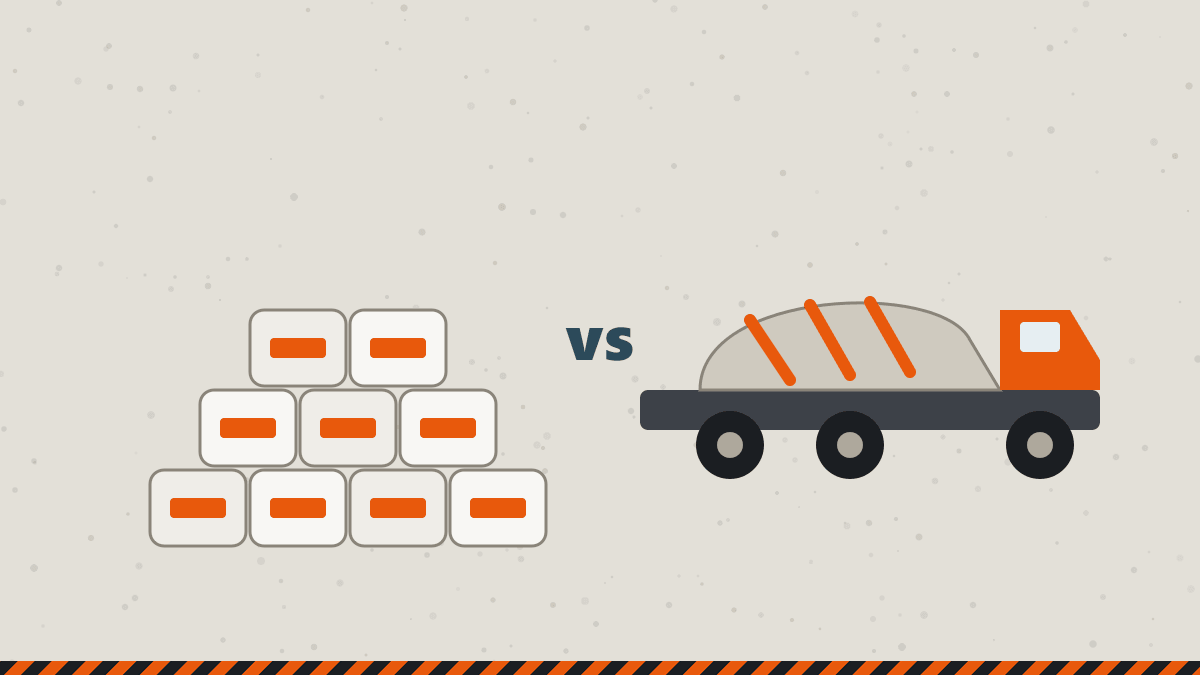
Premixed bags
- 80 lb bags74
- 60 lb bags98
- 30 kg bags89
- 25 kg bags108
- 20 kg bags134
- Weight
- 6,592 lb · 2,990 kg
- Ready-mix truck loads (10 yd³ each)
- 0.16
- Concrete cost
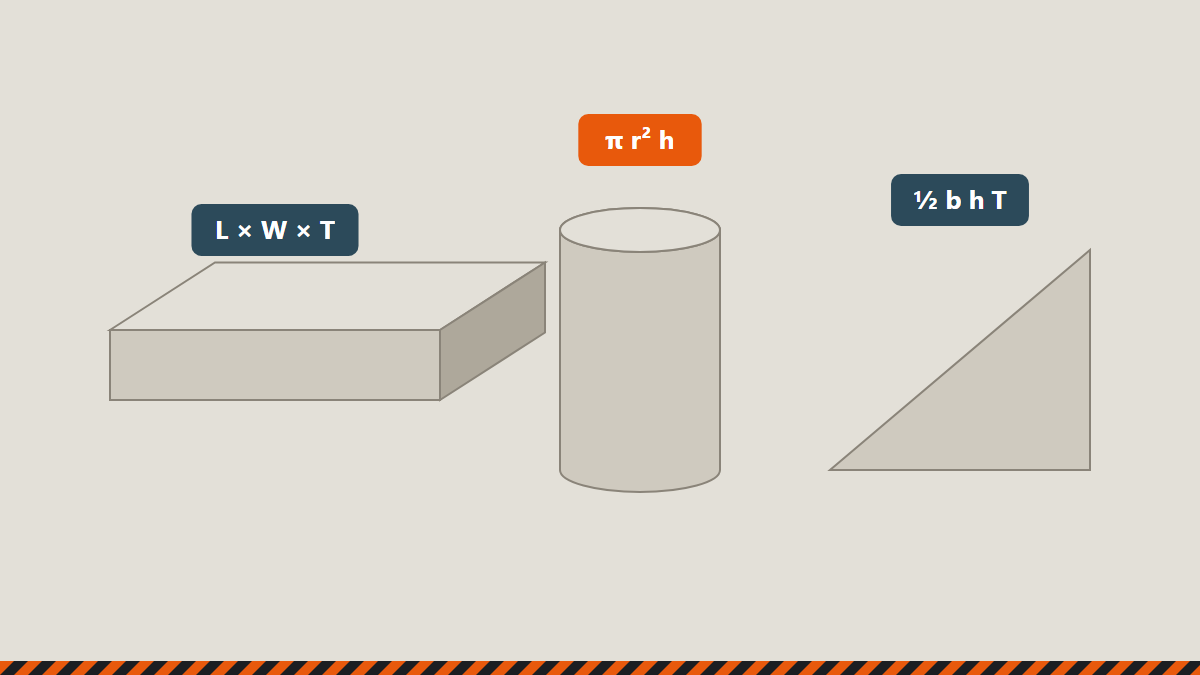
Volume by shape
Formula with your numbers
12 ft × 10 ft × 0.333 ft × 1.1 = 44.00 ft³
Includes a 10% waste allowance. Bags are rounded up. Weight uses 2,400 kg/m³ (150 lb/ft³).
Your estimate1.63 yd³ · 74 × 80 lb
How to Use the Concrete Calculator in Canada
To use the concrete calculator in Canada, follow these 4 steps.
- Select a shape, such as a slab or a round footing.
- Enter each size and set its unit, imperial or metric.
- Add another part for footings or steps.
- Check the waste allowance, then read both volume totals.
Concrete Volume Formula in Feet and Meters
The concrete volume formula multiplies length × width × depth in feet, then divides by 27 for cubic yards.
Volume (ft³) = length (ft) × width (ft) × depth (ft)
Cubic yards (yd³) = volume (ft³) ÷ 27
- Length and width: the pour sizes in feet (ft).
- Depth: the thickness in inches (in) ÷ 12.
- 27: cubic feet in 1 cubic yard.
The metric formula multiplies meters by meters by meters and gives cubic meters (m³) with no extra step.
Volume (m³) = length (m) × width (m) × depth (m)
1 yd³ = 0.7646 m³; 1 m³ = 1.308 yd³
Worked Example: 16 × 14 ft Slab at 5 Inches
A 16 × 14 ft (4.88 × 4.27 m) slab at 5 inches (13 cm) thick holds 3.46 cubic yards (2.64 m³) before waste.
- Change the depth to feet: 5 in ÷ 12 = 0.417 ft.
- Multiply: 16 × 14 × 0.417 = 93.3 ft³, and 93.3 ÷ 27 = 3.46 yd³.
- Add 10% waste: 3.80 yd³ (2.91 m³).
- Count bags, if you mix on site: 172 bags of 80 lb or 207 bags of 30 kg.
Try it
Drag the sliders and the diagram redraws to scale.
Linked to the calculator above: moving a slider updates your estimate.
With your values
16 ft × 14 ft × 0.417 ft = 93.33 ft³
- Cubic feet
- 93.33
- Cubic yards
- 3.46
- Cubic meters
- 2.64
Where to Use the Canadian Concrete Calculator
The Canadian concrete calculator handles these 5 jobs in Ontario and every other province:
- Walkways and paths.
- Hot tub pads.
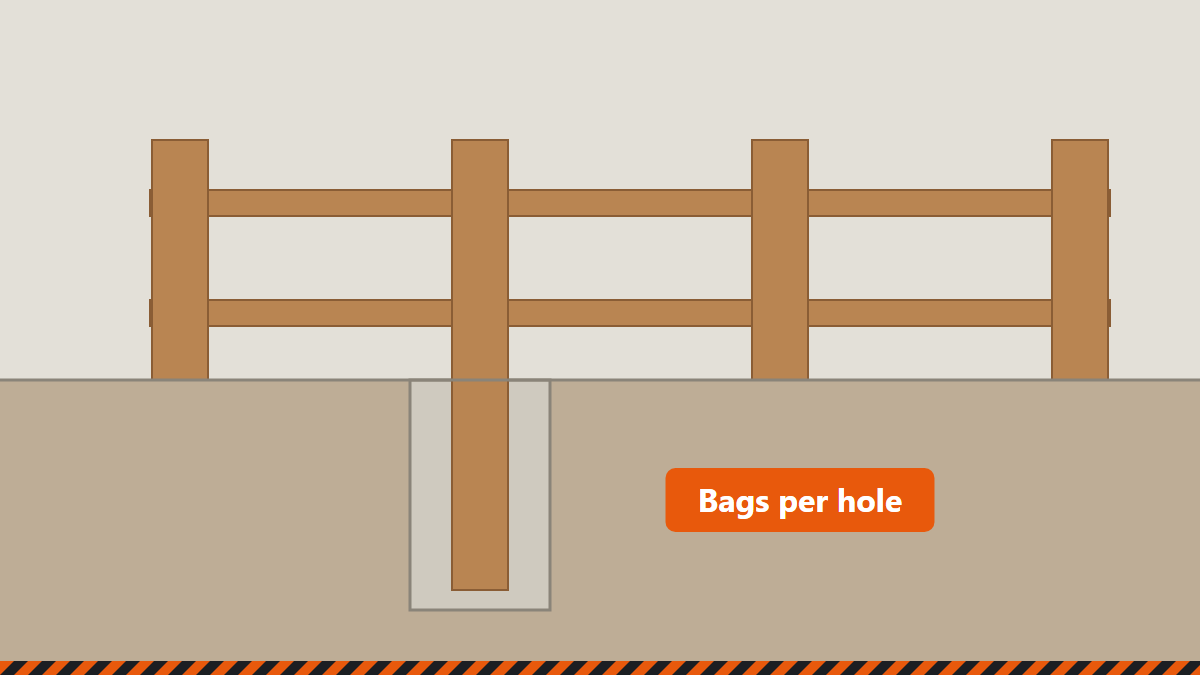
- Deck piers at the local frost depth.
- Strip foundations sized by local code.
- Entry steps with a landing.
Cubic Yards and Cubic Meters in Canada
Canada uses both cubic yards (yd³) and cubic meters (m³) for concrete. Some suppliers quote by the cubic meter, while many house plans stay in feet and inches. Check the unit on each quote before you compare.
Frost Depth Footings
Frost depth footings sit below the depth where the ground freezes, so frost heave does not lift them. The depth changes by region and comes from local code. Check local code before you dig.
A deeper footing needs more concrete. Each extra foot (0.30 m) of depth adds 0.55 ft³ to a 10 in (25 cm) round footing.
Cubic Yards and Cubic Meters for Common Pours
The 16 × 14 ft slab from the worked example sits in row 3 at 3.46 yd³, or 2.64 m³.
| Pour | Cubic yards | Cubic meters | 80 lb bags | 30 kg bags |
|---|---|---|---|---|
| Walkway, 25 × 4 ft at 4 in | 1.23 | 0.94 | 56 | 68 |
| Pad, 12 × 12 ft at 4 in | 1.78 | 1.36 | 80 | 97 |
| Slab, 16 × 14 ft at 5 in | 3.46 | 2.64 | 156 | 188 |
| Strip footing, 60 ft at 20 × 10 in | 3.09 | 2.36 | 139 | 168 |
| Steps, 3 risers, 4 ft wide | 1.02 | 0.78 | 46 | 56 |
Common Concrete Mistakes in Canada
These 4 mistakes come up most on Canadian jobs.
- Comparing a quote in cubic meters with a total in cubic yards. Convert first: 1 m³ = 1.308 yd³.
- Guessing the footing depth instead of reading local code.
- Counting 80 lb and 30 kg bags as equal. Their yields differ.
- Leaving out the 5 to 10 percent waste allowance.
Concrete Calculator Canada FAQ
Does Canada use cubic yards or cubic meters for concrete?
Canada uses both cubic yards and cubic meters for concrete. Some ready-mix suppliers quote by the cubic meter, and many contractors and plans still work in feet and cubic yards. The calculator shows both totals together, so the number on a supplier quote is always in the results panel.
How deep should footings be in Canada?
Footings in Canada go below the local frost depth set by the provincial building code and the municipality. The depth differs between regions, and soil conditions change it again. Ask the local building department before you dig, then enter that depth in the calculator to get the concrete volume for each footing.
Can I switch the calculator to metric?
Yes, each field has its own unit menu, so any size switches to meters, centimeters, or millimeters on its own. Mixed input works, such as a length in feet and a depth in centimeters. The results always list cubic yards, cubic meters, and cubic feet, plus pound and kilogram bag counts.
How much concrete do I need for a 12 × 10 slab?
A 12 × 10 ft slab at 4 inches (10 cm) needs 1.48 cubic yards (1.13 m³) before waste. With 10 percent extra, plan for 1.63 yd³ (1.25 m³). That volume equals 74 bags of 80 lb or 89 bags of 30 kg premixed concrete.
Sources
Every result on this page uses plain geometry and the exact unit definitions below. The full list of formulas and constants is on the How we calculate page.
Related guides