Concrete Slab Size Chart
This 10x10 concrete calculator and size chart covers 12 common slab sizes, from 5 × 5 ft to 30 × 50 ft. Tap a size chip or type your own sizes. The results show cubic feet, cubic yards, cubic meters, and bag counts.
 By Muhammad AsimPublished How we calculate
Your estimate
Total volume with waste
1.36yd³
- Cubic meters
- 1.04 m³
- Cubic feet
- 36.7 ft³
Premixed bags
- 80 lb bags62
- 60 lb bags82
- 40 lb bags123
- 25 kg bags90
- 20 kg bags112
- Weight
- 5,494 lb · 2,492 kg
- Ready-mix truck loads (10 yd³ each)
- 0.14
- Concrete cost
Formula with your numbers
10 ft × 10 ft × 0.333 ft × 1.1 = 36.67 ft³
Includes a 10% waste allowance. Bags are rounded up. Weight uses 2,400 kg/m³ (150 lb/ft³).
Your estimate1.36 yd³ · 62 × 80 lb
Planning several pours or a cost sheet? Get the free Excel template (7 tabs, no sign-up).
How to Use the Slab Size Chart Calculator
The size chart calculator works in 3 steps.
- Tap the chip that matches your slab, such as 12×12 or 24×24.
- Change the thickness, if it is not 4 inches (10 cm).
- Read the cubic yards or the bag counts.
Slab Size Formula
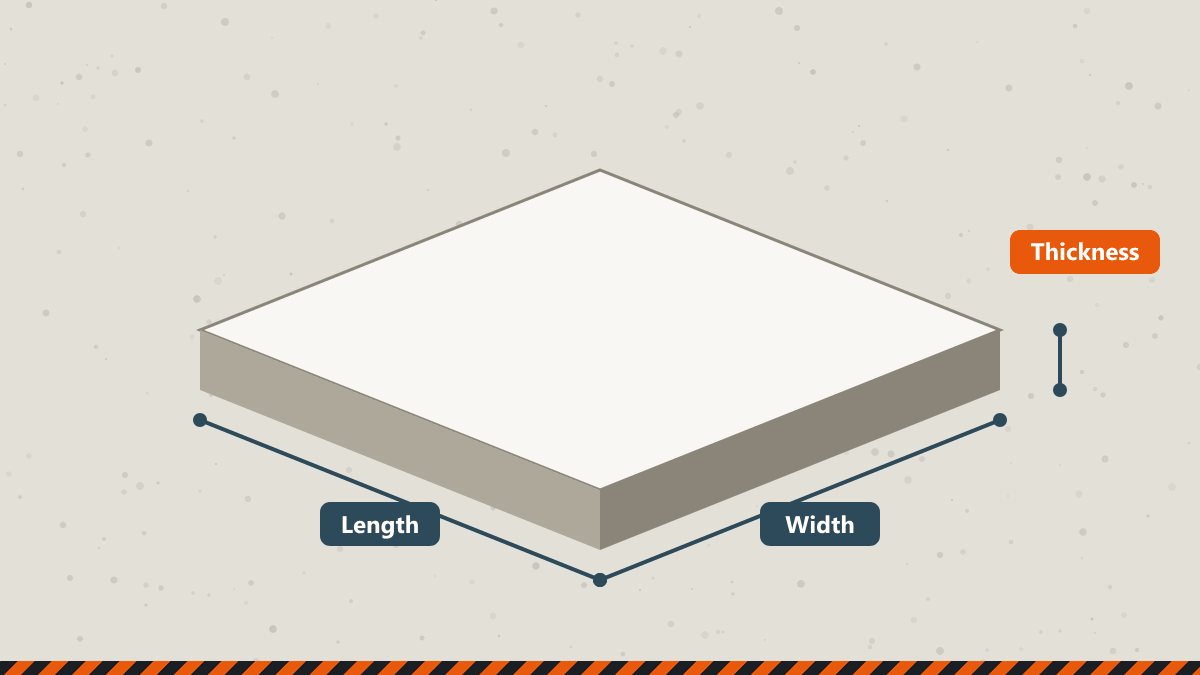
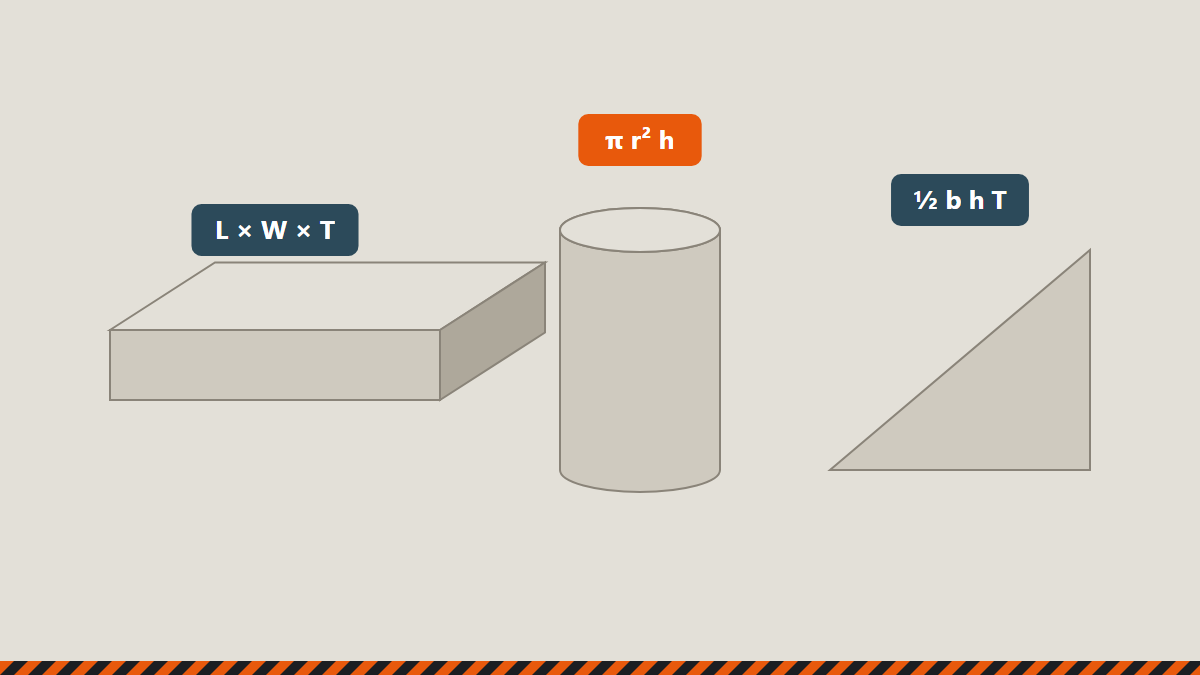
Every size in the chart uses length × width × thickness in feet, divided by 27 for cubic yards.
Volume (ft³) = length (ft) × width (ft) × thickness (in) ÷ 12
Cubic yards = volume (ft³) ÷ 27
- Length and width: the slab size, in feet (ft).
Metric sizes use meters and give cubic meters (m³).
Volume (m³) = length (m) × width (m) × thickness (m)
Worked Example: 10x10 Concrete Calculator at 4 Inches
A 10 × 10 ft slab (3.05 × 3.05 m) at 4 inches thick needs 33.3 cubic feet, or 1.23 cubic yards (0.94 m³).
- Multiply the sides and the thickness in feet: 10 × 10 × (4 ÷ 12) = 33.3 ft³.
- Divide by 27: 33.3 ÷ 27 = 1.23 yd³.
- Add 10% for waste: 1.36 yd³, or 62 bags of 80 lb (82 bags of 60 lb).
Try it
Drag the sliders and the diagram redraws to scale.
Linked to the calculator above: moving a slider updates your estimate.
With your values
10 ft × 10 ft × 0.333 ft = 33.33 ft³
- Cubic feet
- 33.33
- Cubic yards
- 1.23
- Cubic meters
- 0.94
Where to Use the Slab Size Chart
The chart covers 4 groups of projects:
- Shed and AC pads: 5 × 5, 8 × 8, and 10 × 10 ft slabs.
- Patios and hot tub pads: 12 × 12 and 16 × 16 ft slabs.
- Garage floors: 20 × 20, 24 × 24, and 24 × 30 ft slabs.
- Shops and pole barns: 20 × 40, 30 × 30, 30 × 40, and 30 × 50 ft slabs.
Small Slabs at 4 Inches: 5 × 5 to 12 × 12
- 5 × 5 ft at 5 in: 10.4 ft³, 0.39 yd³ (0.29 m³), bags: 24 (60 lb), 18 (80 lb).
- 8 × 8 ft: 21.3 ft³, 0.79 yd³ (0.60 m³), bags: 48 (60 lb), 36 (80 lb).
- 10 × 10 ft: 33.3 ft³, 1.23 yd³ (0.94 m³), bags: 75 (60 lb), 56 (80 lb).
- 12 × 12 ft: 48.0 ft³, 1.78 yd³ (1.36 m³), bags: 107 (60 lb), 80 (80 lb).
Medium Slabs at 4 Inches: 16 × 16 to 24 × 30
- 16 × 16 ft: 85.3 ft³, 3.16 yd³ (2.42 m³), bags: 190 (60 lb), 143 (80 lb).
- 20 × 20 ft: 133.3 ft³, 4.94 yd³ (3.78 m³), bags: 297 (60 lb), 223 (80 lb).
- 24 × 24 ft: 192.0 ft³, 7.11 yd³ (5.44 m³), bags: 427 (60 lb), 320 (80 lb).
- 24 × 30 ft: 240.0 ft³, 8.89 yd³ (6.80 m³), bags: 534 (60 lb), 400 (80 lb).
Large Slabs at 4 Inches: 20 × 40 to 30 × 50
- 20 × 40 ft: 266.7 ft³, 9.88 yd³ (7.55 m³), bags: 593 (60 lb), 445 (80 lb).
- 30 × 30 ft: 300.0 ft³, 11.11 yd³ (8.50 m³), bags: 667 (60 lb), 500 (80 lb).
- 30 × 40 ft: 400.0 ft³, 14.81 yd³ (11.33 m³), bags: 889 (60 lb), 667 (80 lb).
- 30 × 50 ft: 500.0 ft³, 18.52 yd³ (14.16 m³), bags: 1112 (60 lb), 834 (80 lb).
Concrete Slab Size Chart
A 12 × 12 ft slab at 4 inches needs 1.78 cubic yards.
| Slab size | Cubic feet | Cubic yards | Cubic meters | 60 lb bags | 80 lb bags |
|---|---|---|---|---|---|
| 5 × 5 ft × 5 in | 10.4 | 0.39 | 0.29 | 24 | 18 |
| 8 × 8 ft | 21.3 | 0.79 | 0.60 | 48 | 36 |
| 10 × 10 ft | 33.3 | 1.23 | 0.94 | 75 | 56 |
| 12 × 12 ft | 48.0 | 1.78 | 1.36 | 107 | 80 |
| 16 × 16 ft | 85.3 | 3.16 | 2.42 | 190 | 143 |
| 20 × 20 ft | 133.3 | 4.94 | 3.78 | 297 | 223 |
| 24 × 24 ft | 192.0 | 7.11 | 5.44 | 427 | 320 |
| 24 × 30 ft | 240.0 | 8.89 | 6.80 | 534 | 400 |
| 20 × 40 ft | 266.7 | 9.88 | 7.55 | 593 | 445 |
| 30 × 30 ft | 300.0 | 11.11 | 8.50 | 667 | 500 |
| 30 × 40 ft | 400.0 | 14.81 | 11.33 | 889 | 667 |
| 30 × 50 ft | 500.0 | 18.52 | 14.16 | 1112 | 834 |
Common Slab Size Mistakes
The 3 most common slab size mistakes involve the thickness unit, waste, and the bag plan.
- Keep the thickness in inches. A 10 × 10 slab entered as 4 ft thick shows 14.81 yd³ instead of 1.23 yd³.
- Add 5 to 10 percent for waste to the exact chart volumes.
- Switch to ready-mix for the large sizes. A 30 × 50 ft slab takes 834 bags of 80 lb concrete.
Concrete Slab Size Chart FAQ
How much concrete do I need for an 8x8 slab?
An 8 × 8 ft slab at 4 inches thick needs 0.79 cubic yards (21.3 ft³), or 36 bags of 80 lb concrete, before waste. In metric, that is 0.60 m³. Add 10 percent for waste and plan for 40 bags of 80 lb concrete.
How much concrete do I need for a 5x5x5 pour?
A 5 × 5 ft slab at 5 inches thick needs 10.4 cubic feet (0.39 yd³), or 18 bags of 80 lb concrete. A solid 5 × 5 × 5 ft cube is a far larger pour: 125.0 cubic feet, or 4.63 cubic yards (3.54 m³), before waste.
How much concrete do I need for a 30x40 slab?
A 30 × 40 ft slab at 4 inches needs 14.81 cubic yards (11.33 m³), before waste. With 10 percent extra, order 16.30 yd³. The same slab equals 667 bags of 80 lb concrete, so ready-mix concrete is the practical choice.
How many yards of concrete do I need for a 20x20 slab?
A 20 × 20 ft slab at 4 inches needs 4.94 cubic yards (3.78 m³) of concrete, before waste. With 10 percent extra for waste, order 5.43 yd³ of ready-mix concrete. At 6 inches thick, the same slab needs 7.41 yd³.
Sources
Every result on this page uses plain geometry and the exact unit definitions below. The full list of formulas and constants is on the How we calculate page.
Related guides