Trench & Duct Bank Concrete Calculator
This concrete calculator trench tool finds the volume of a trench fill or duct bank from length × width × depth. Enter feet, inches, meters, or centimeters. The results show cubic yards, cubic feet, and cubic meters, bag counts, weight, truck loads, and cost, with a 10% waste allowance.
 By Muhammad AsimPublished Updated How we calculate
Your estimate
Total volume with waste
6.11yd³
- Cubic meters
- 4.67 m³
- Cubic feet
- 165.0 ft³
Premixed bags
- 80 lb bags275
- 60 lb bags367
- 40 lb bags550
- 25 kg bags402
- 20 kg bags500
- Weight
- 24,721 lb · 11,213 kg
- Ready-mix truck loads (10 yd³ each)
- 0.61
- Concrete cost
Formula with your numbers
100 ft × 1.5 ft × 1 ft × 1.1 = 165.00 ft³
Includes a 10% waste allowance. Bags are rounded up. Weight uses 2,400 kg/m³ (150 lb/ft³).
Your estimate6.11 yd³ · 275 × 80 lb
Planning several pours or a cost sheet? Get the free Excel template (7 tabs, no sign-up).
How to Use the Trench Calculator
To use the trench calculator, follow these 4 steps.
- Enter the total trench length.
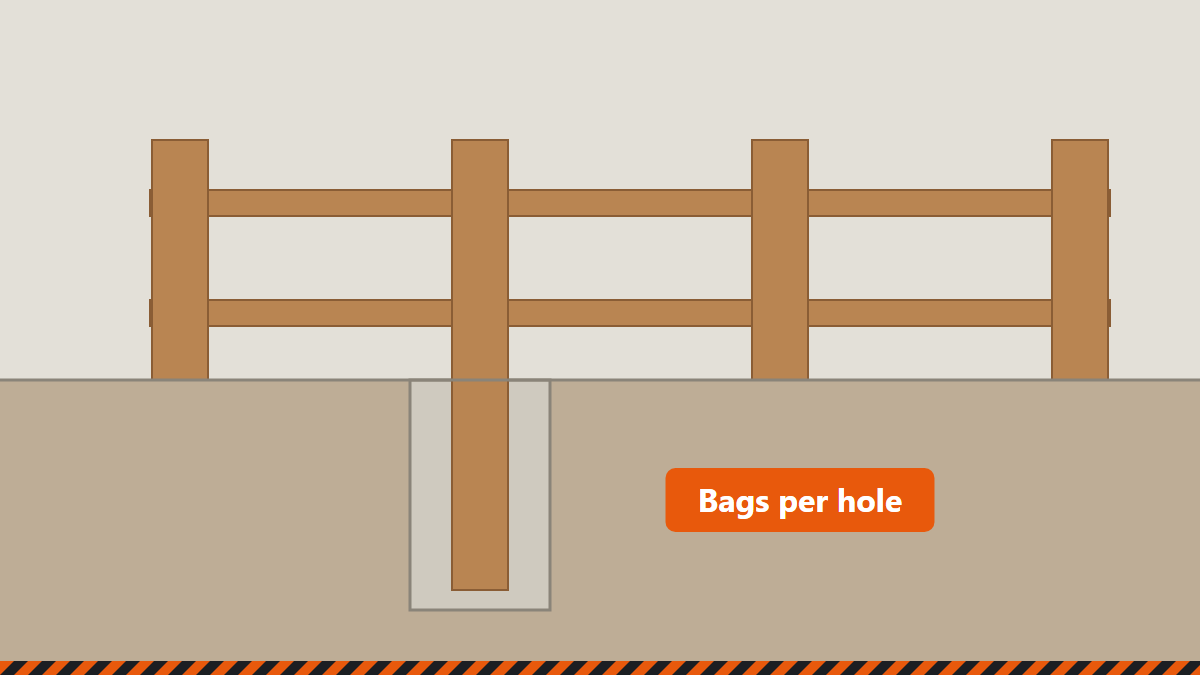
- Enter the trench width as dug and the depth of the concrete, not the full trench depth.
- Set the number of trenches.
- Set the waste allowance and read the results.
Concrete Calculator Trench Formula
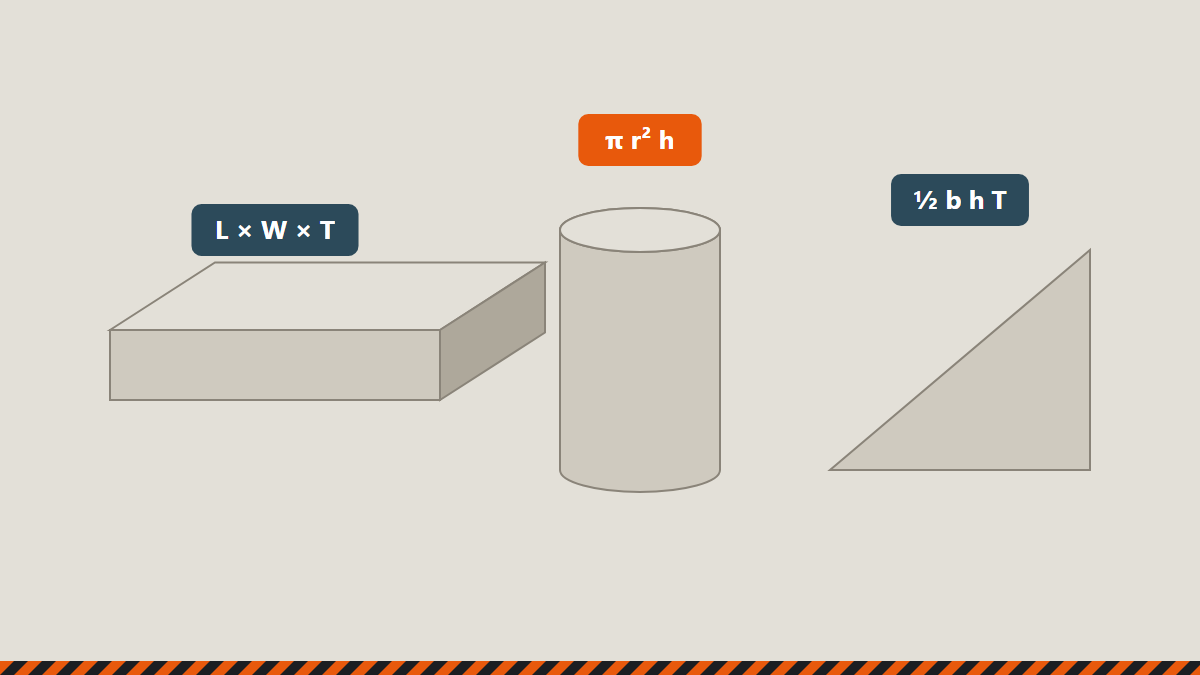
The trench formula multiplies length × width × depth in feet. For a duct bank, subtract the space the conduits fill. Divide cubic feet by 27 to get cubic yards.
Volume (ft³) = length (ft) × width (ft) × depth (ft)
Conduit space (ft³) = π × (conduit diameter (ft) ÷ 2)² × length (ft) × number of conduits
Cubic yards (yd³) = (volume − conduit space) ÷ 27
- Length: the total trench run, in feet (ft).
- Width: the dug width in inches (in) ÷ 12.
- Depth: the concrete depth in inches ÷ 12.
- Conduit diameter: the outside diameter of each conduit, in inches ÷ 12.
In metric, use meters to get cubic meters (m³).
Volume (m³) = length (m) × width (m) × depth (m)
1 m³ = 1.308 yd³ = 35.3 ft³
Worked Example: 100 ft Trench, 18 × 12 Inches
A trench 100 ft (30.5 m) long, 18 inches (46 cm) wide, and filled 12 inches (30 cm) deep holds 150.00 cubic feet, or 5.56 cubic yards (4.25 m³).
- Multiply the dimensions: 100 ft × 1.5 ft × 1 ft = 150.00 ft³.
- Convert to cubic yards: 150.00 ÷ 27 = 5.56 yd³.
- Add 10% for waste: 6.11 yd³ (165.00 ft³), or 275 bags of 80 lb concrete.
Try it
Drag the sliders and the diagram redraws to scale.
Linked to the calculator above: moving a slider updates your estimate.
With your values
100 ft × 1.5 ft × 1 ft = 150.00 ft³
- Cubic feet
- 150.00
- Cubic yards
- 5.56
- Cubic meters
- 4.25
Where to Use the Trench Calculator
The trench calculator covers 4 common pours, including duct encasement and drainage. The sizes are sample inputs:
- Duct encasement: a 100 ft duct bank, 18 × 12 in, around 4 conduits of 4 in needs 4.26 yd³ (3.26 m³).
- Drainage channels: a 40 ft trench drain base, 12 in wide and 8 in deep, needs 26.67 ft³ (0.76 m³).
- Utility trenches: a 60 ft cable trench capped 12 in wide and 6 in deep needs 1.11 yd³ (0.85 m³).
- Pipe protection: an 80 ft cap, 8 in wide and 4 in deep, needs 17.78 ft³, or 30 bags of 80 lb concrete.
Concrete Calculator for a Duct Bank
A concrete encasement calculator for a duct bank subtracts the conduits from the trench volume. One 4 inch (10 cm) conduit, 100 ft long, fills 8.73 ft³. Four of them fill 34.91 ft³.
- Trench volume: 100 ft × 18 in × 12 in = 150.00 ft³.
- Conduit space: π × (4 in ÷ 2)² × 100 ft × 4 = 34.91 ft³.
- Encasement: 150.00 − 34.91 = 115.09 ft³, or 4.26 yd³ (3.26 m³).
- With 10% waste: 4.69 yd³.
The duct bank layout, cover depth, and concrete mix come from the project drawings or the utility. This page gives no engineering advice.
Trenches That Change Depth
A dug trench is rarely the same depth end to end. Measure the depth at equal steps, average the readings, and enter the average as the depth. For a 100 ft trench 12 in wide, measured every 20 ft:
| Distance along trench | Depth reading |
|---|---|
| 0 ft | 12 in (30 cm) |
| 20 ft | 14 in (36 cm) |
| 40 ft | 16 in (41 cm) |
| 60 ft | 15 in (38 cm) |
| 80 ft | 13 in (33 cm) |
| 100 ft | 14 in (36 cm) |
| Average | 14.0 in |
At the 14.0 in average depth, the trench holds 116.7 ft³, or 4.75 yd³ with 10% waste. Using the shallowest reading of 12 in would order 0.62 yd³ too little.
Concrete per 10 Feet of Trench
To estimate concrete per foot of trench, find the width and depth below and multiply by your length ÷ 10.
| Width × depth | Cubic feet | Cubic yards | Cubic meters | 80 lb bags |
|---|---|---|---|---|
| 12 × 6 in (30 × 15 cm) | 5.00 | 0.19 | 0.14 | 9 |
| 12 × 12 in (30 × 30 cm) | 10.00 | 0.37 | 0.28 | 17 |
| 12 × 18 in (30 × 46 cm) | 15.00 | 0.56 | 0.42 | 25 |
| 18 × 6 in (46 × 15 cm) | 7.50 | 0.28 | 0.21 | 13 |
| 18 × 12 in (46 × 30 cm) | 15.00 | 0.56 | 0.42 | 25 |
| 18 × 18 in (46 × 46 cm) | 22.50 | 0.83 | 0.64 | 38 |
| 24 × 6 in (61 × 15 cm) | 10.00 | 0.37 | 0.28 | 17 |
| 24 × 12 in (61 × 30 cm) | 20.00 | 0.74 | 0.57 | 34 |
| 24 × 18 in (61 × 46 cm) | 30.00 | 1.11 | 0.85 | 50 |
Common Trench Calculation Mistakes
The 4 most common trench mistakes are listed below.
- Measure the trench as dug. A 100 ft trench dug 20 in wide instead of 18 in takes 16.67 ft³ (0.62 yd³) more concrete at 12 in deep.
- Enter the concrete depth, not the full trench depth, if backfill or sand goes on top.
- Subtract conduits for a duct bank, and use the outside diameter of each conduit.
- Add 5 to 10 percent extra, if the trench walls are loose or uneven.
Trench & Duct Bank Concrete Calculator FAQ
How much concrete do I need for a trench?
A trench 100 ft long, 18 inches wide, and filled 12 inches deep needs 150.00 cubic feet, or 5.56 cubic yards (4.25 m³). With a 10 percent waste allowance, plan for 6.11 yd³. Enter your own length, width, and depth above for an exact figure.
How do I calculate concrete for a duct bank?
To calculate concrete for a duct bank, find the trench volume, then subtract π × (conduit diameter ÷ 2)² × length for each conduit. Work in feet and divide the result by 27 for cubic yards. Use the outside conduit diameter, and add 5 to 10 percent for waste.
Does the trench calculator subtract the conduits?
No, the trench calculator gives the full trench volume. Subtract the conduits by hand with the formula on this page. Four 4 inch conduits over 100 ft fill 34.91 cubic feet, so a 100 ft trench at 18 × 12 inches needs 115.09 ft³ of encasement.
How many bags of concrete do I need for 10 feet of trench?
A 10 ft trench, 12 inches wide and 12 inches deep, needs 17 bags of 80 lb concrete or 23 bags of 60 lb concrete, before waste. The trench holds 10.00 cubic feet (0.28 m³). Add 10 percent for waste and round up.
What if my trench is not the same depth all the way?
Measure the depth every 10 to 20 feet, add the readings, and divide by the number of readings. Enter that average as the depth. Six readings averaging 14.0 inches on a 100 ft trench 12 inches wide give 4.75 cubic yards with 10 percent waste.
Sources
Every result on this page uses plain geometry and the exact unit definitions below. The full list of formulas and constants is on the How we calculate page.
Related guides