Concrete Calculator South Africa
This concrete calculator South Africa page turns slab, footing, or hole sizes into cubic meters (m³). It applies length × width × depth, waste, and the 1.54 dry volume factor. The results show 25 kg and 50 kg cement bags, sand, and stone for a 1:2:3 or 1:2:4 mix.
 By Muhammad AsimPublished How we calculate
Your estimate
Total volume with waste
0.99m³
- Cubic yards
- 1.29 yd³
- Cubic feet
- 35.0 ft³
Premixed bags
- Weight
- 2,376 kg · 5,238 lb
- Ready-mix truck loads (10 yd³ each)
- 0.13
- Concrete cost
Dry materials (1:2:3 general, × 1.54 dry volume)
- Cement
- 0.25 m³
- 9.0 ft³
- Sand
- 0.51 m³
- 17.9 ft³
- Stone
- 0.76 m³
- 26.9 ft³
Cement: 8 bags of 50 kg
Cement: 16 bags of 25 kg
Formula with your numbers
9.843 ft × 9.843 ft × 0.328 ft × 1.1 = 34.96 ft³
Includes a 10% waste allowance. Bags are rounded up. Weight uses 2,400 kg/m³ (150 lb/ft³).
Your estimate0.99 m³
Planning several pours or a cost sheet? Get the free Excel template (7 tabs, no sign-up).
How to Use the Concrete Calculator in South Africa
To use the concrete calculator in South Africa, follow these 4 steps.
- Choose Slab, Strip footing, Round hole, or Volume.
- Enter the sizes in meters or millimeters.
- Pick 1:2:3 for slabs and paths, or 1:2:4 for footings.
- Read the m³ total, the cement bags, and the sand and stone.
Concrete Calculator South Africa Formula
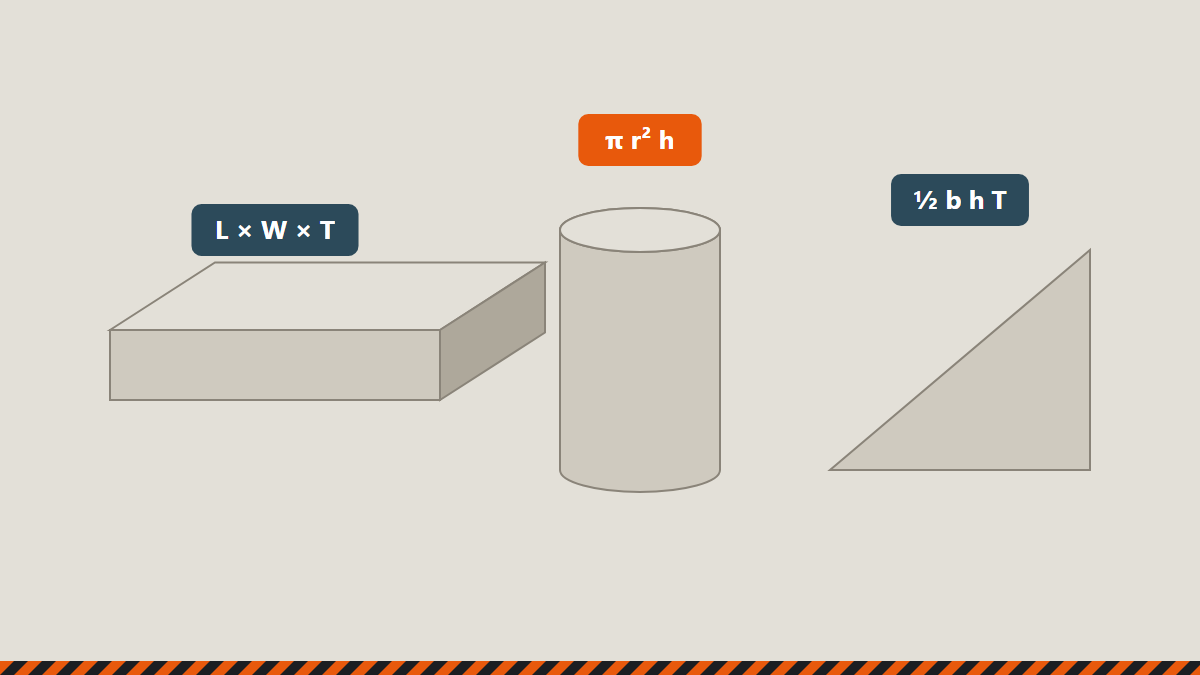
The concrete calculator South Africa formula starts with length × width × depth in meters, then multiplies by 1.54 for the dry materials. Each material takes its share of the mix ratio.
Wet volume (m³) = length (m) × width (m) × depth (m)
Dry volume (m³) = wet volume × 1.54
Material (m³) = dry volume × its part ÷ total parts
Cement bags = cement (m³) ÷ bag volume, rounded up
- Depth: the thickness in millimeters (mm) ÷ 1,000.
- 1.54: the dry volume factor for loose cement, sand, and stone.
- Total parts: 6 for 1:2:3 and 7 for 1:2:4.
- Bag volume: 0.0332 m³ for 50 kg and 0.0166 m³ for 25 kg.
The imperial version divides cubic feet by 27 to give cubic yards (yd³).
Volume (yd³) = length (ft) × width (ft) × depth (ft) ÷ 27
1 m³ = 1.308 yd³
Worked Example: 3 × 3 m Braai Area Slab
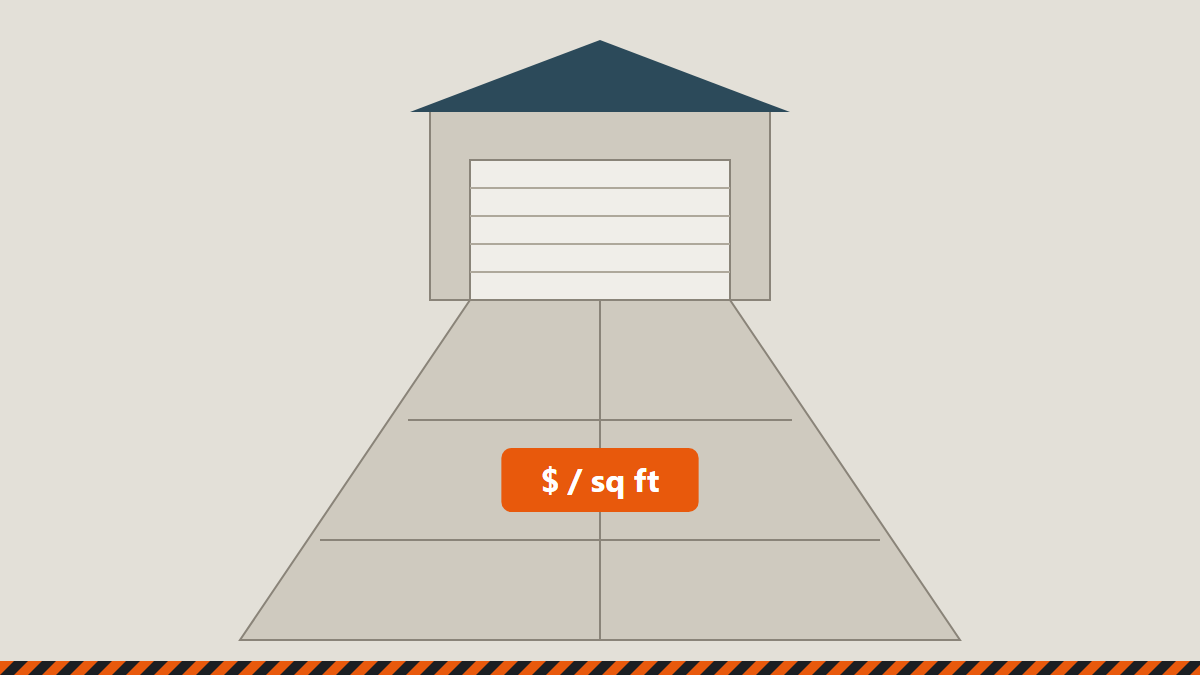
A 3 × 3 m braai area slab at 100 mm (4 in) holds 0.90 m³ (1.18 yd³). At 1:2:3, the slab takes 7 bags of 50 kg cement, 0.46 m³ of sand, and 0.69 m³ of stone, before waste.
- Find the wet volume: 3 × 3 × 0.1 = 0.90 m³.
- Find the dry volume: 0.90 × 1.54 = 1.39 m³.
- Cement takes 1 of 6 parts: 1.39 ÷ 6 = 0.23 m³, or 7 bags of 50 kg (14 bags of 25 kg).
- Sand takes 2 parts (0.46 m³), and stone takes 3 parts (0.69 m³).
At 1:2:4, the same slab takes 6 bags of 50 kg cement, 0.40 m³ of sand, and 0.79 m³ of stone. The bag count uses loose cement at about 1,506 kg/m³, since a 94 lb bag holds 1 ft³ (CMHA TEK 04-02A). Local practice may use a slightly different figure, so check with your supplier.
Where to Use the Calculator in South Africa
The calculator suits 4 common jobs around South African homes:
- Carport slabs: 6 × 3 m at 100 mm takes 14 bags of 50 kg cement at 1:2:3.
- Boundary wall footings: 20 m × 500 × 200 mm takes 14 bags of 50 kg cement at 1:2:4.
- Garden paths: 8 × 1 m at 75 mm holds 0.60 m³.
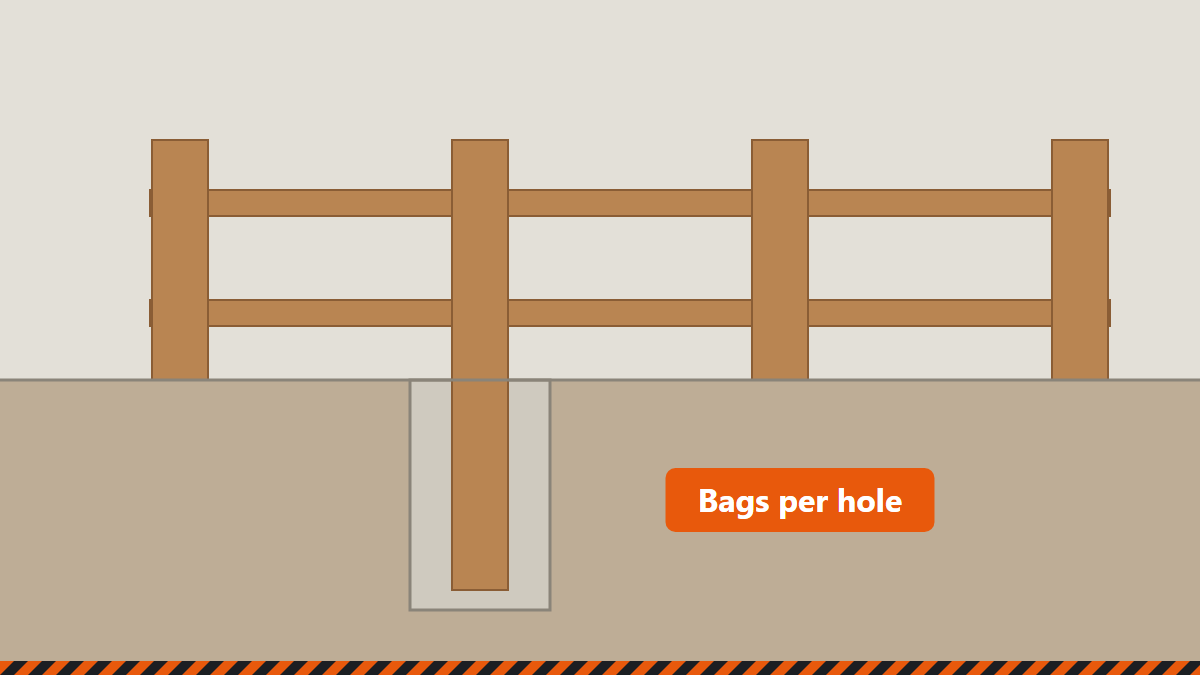
- Gate posts: 6 holes, 300 mm wide and 600 mm deep, hold 0.25 m³.
Sand and Stone for Site Mixing
Sand and stone are the 2 aggregates in a site mix, and cement binds them once water goes in. Builders' merchants in South Africa sell sand and stone by the cubic meter and cement in 25 kg and 50 kg bags.
Cement, Sand, and Stone for Sample Jobs
A 20 m boundary wall footing at 500 × 200 mm takes 14 bags of 50 kg cement at 1:2:4.
| Job and mix | Wet volume (m³) | 50 kg bags | 25 kg bags | Sand (m³) | Stone (m³) |
|---|---|---|---|---|---|
| Garden path, 8 × 1 m at 75 mm, 1:2:3 | 0.60 | 5 | 10 | 0.31 | 0.46 |
| Carport slab, 6 × 3 m at 100 mm, 1:2:3 | 1.80 | 14 | 28 | 0.92 | 1.39 |
| Wall footing, 20 m × 500 × 200 mm, 1:2:4 | 2.00 | 14 | 27 | 0.88 | 1.76 |
| 6 gate post holes, 300 mm × 600 mm, 1:2:3 | 0.25 | 2 | 4 | 0.13 | 0.20 |
Common Site-Mix Mistakes
These 3 mistakes cause most short orders of cement, sand, and stone.
- Ordering the wet volume only. The 0.90 m³ braai slab needs 1.39 m³ of dry materials.
- Guessing the depth. The same 3 × 3 m slab at 120 mm holds 1.08 m³, not 0.90 m³.
- Using 1:2:3 for footings. Pick 1:2:4, unless the plans say otherwise.
Concrete Calculator South Africa FAQ
How many 50 kg bags of cement are in 1 m³ of concrete?
One cubic meter of 1:2:3 concrete needs 8 bags of 50 kg cement on this calculator, or 16 bags of 25 kg, before waste. The cement share is 0.26 m³ of the 1.54 m³ dry volume. Check the count with your supplier, since local practice may differ slightly.
How much sand and stone do I need for 1 m³?
One cubic meter of 1:2:3 concrete needs 0.51 m³ of sand and 0.77 m³ of stone, before waste. The dry volume is 1 × 1.54 = 1.54 m³, split into 6 parts. Sand takes 2 parts and stone takes 3 parts. Order a little extra for loose material left on the ground.
Which mix ratio should I use for footings?
Use 1:2:4 for footings, meaning 1 part cement, 2 parts sand, and 4 parts stone by volume. Use 1:2:3 for slabs, paths, and general work. If the plans or a structural engineer give a different mix, follow the plans and enter the sizes from the drawings into the calculator.
Can I use 25 kg cement bags in the calculator?
Yes, the calculator shows both 25 kg and 50 kg cement bag counts for every mix. Each count is rounded up to a whole bag. A 25 kg bag holds half the cement of a 50 kg bag, so the 25 kg count is about double, plus any rounding up.
Sources
Every result on this page uses plain geometry and the exact unit definitions below. The full list of formulas and constants is on the How we calculate page.
Related guides