Concrete Calculator UK
This concrete calculator for UK projects measures in meters, centimeters, and millimeters by default. It multiplies length × width × depth for each part of the pour and adds the parts together. The results show cubic meters first, then cubic yards and cubic feet, plus counts of 20, 25, and 30 kg bags, weight, and cost.
 By Muhammad AsimPublished How we calculate
Your estimate
Total volume with waste
1.32m³
- Cubic yards
- 1.73 yd³
- Cubic feet
- 46.6 ft³
Premixed bags
- 20 kg bags142
- 25 kg bags114
- 30 kg bags94
- Weight
- 3,168 kg · 6,984 lb
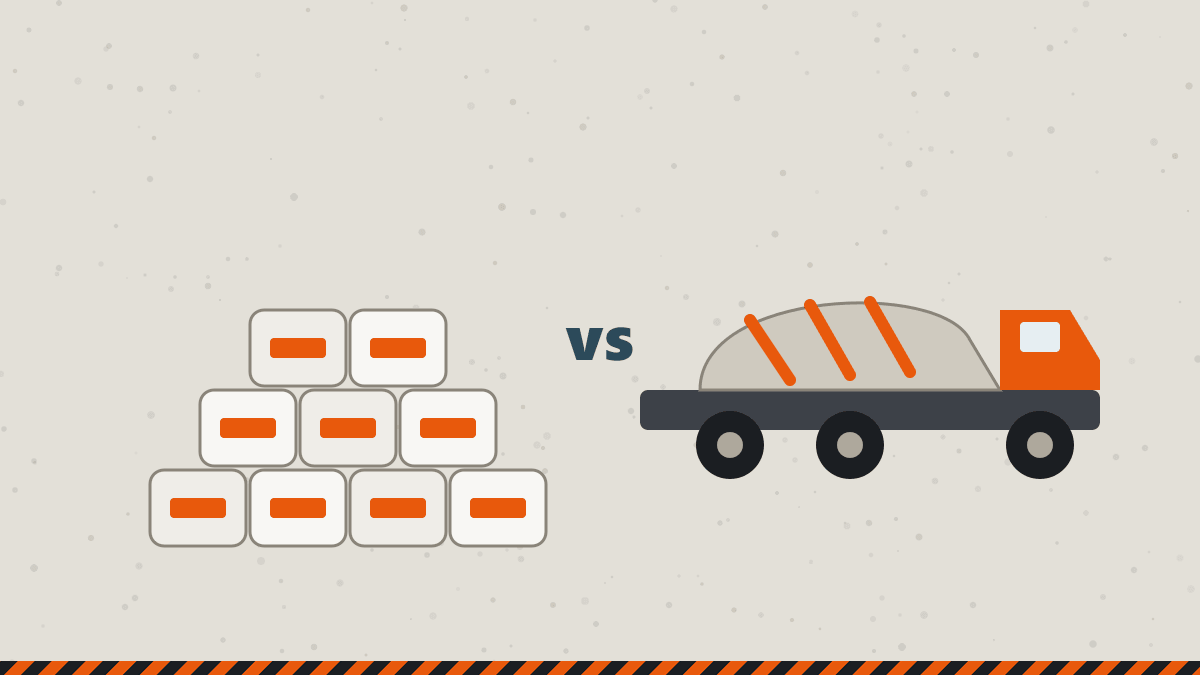
- Ready-mix truck loads (10 yd³ each)
- 0.17
- Concrete cost
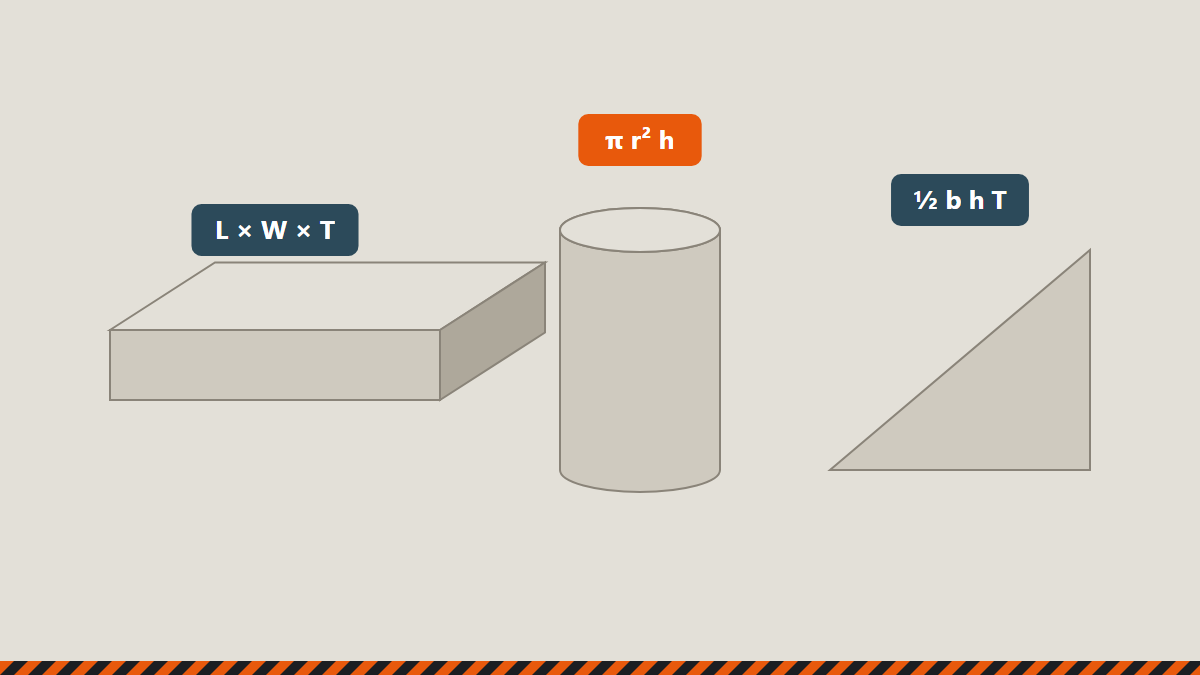
Volume by shape
Formula with your numbers
4 m × 3 m × 0.1 m × 1.1 = 1.320 m³
Includes a 10% waste allowance. Bags are rounded up. Weight uses 2,400 kg/m³ (150 lb/ft³).
Your estimate1.32 m³ · 142 × 20 kg
How to Use the Concrete Calculator in the UK
To use the concrete calculator in the UK, follow these 4 steps.
- Pick a shape, such as a slab, fence post hole, or kerb.
- Enter each size and check its unit: m, cm, or mm.
- Add a part for every extra section of the pour.
- Set the waste allowance, then read cubic meters and bag counts.
Metric Concrete Volume Formula
The metric concrete volume formula is length × width × depth in meters, which gives cubic meters (m³) directly.
Volume (m³) = length (m) × width (m) × depth (m)
Depth (m) = depth (mm) ÷ 1,000
- Length and width: the pour sizes in meters (m).
- Depth: the depth in millimeters (mm) ÷ 1,000.
The imperial version divides cubic feet by 27 to give cubic yards (yd³).
Volume (yd³) = length (ft) × width (ft) × depth (ft) ÷ 27
1 m³ = 1.308 yd³ = 35.3 ft³
Worked Example: 4 × 3 m Patio at 100 mm
A 4 × 3 m patio base at 100 mm (4 in) deep needs 1.20 m³ (1.57 yd³) of concrete before waste.
- Change the depth to meters: 100 mm ÷ 1,000 = 0.1 m.
- Multiply the sizes: 4 m × 3 m × 0.1 m = 1.20 m³.
- Allow 10% for waste: 1.20 × 1.1 = 1.32 m³ (1.73 yd³).
- Convert to bags: 1.32 m³ takes 114 bags of 25 kg or 142 bags of 20 kg premixed concrete.
Where to Use the UK Concrete Calculator
The UK concrete calculator covers 5 common jobs:
- Patios and paths, with the slab shape.
- Shed bases, with the slab shape.
- Driveways, with a deeper slab depth.
- Kerbs, with the curb and gutter shape.
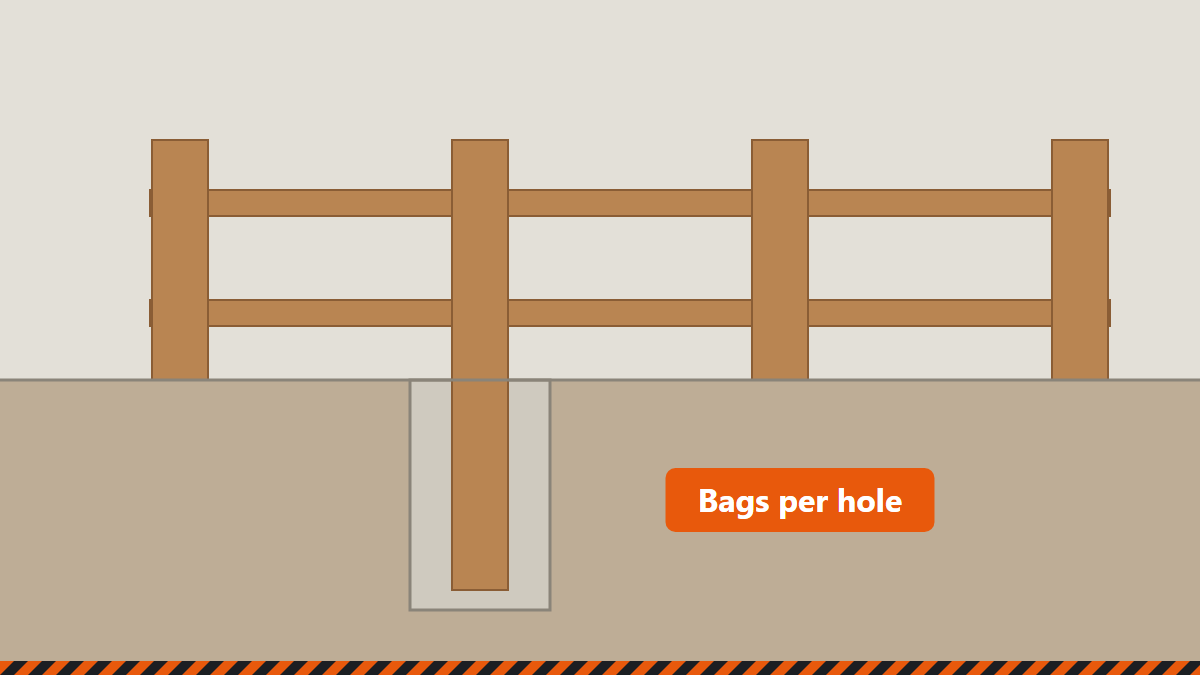
- Fence posts, with the post hole shape.
Ballast and Cement for Mixing on Site
Ballast and cement are the 2 dry materials for mixing concrete on site. All-in ballast is a mix of sand and gravel, and Portland cement binds it once water goes in. The mix your builder or supplier specifies sets the amount of each material.
How UK Suppliers Sell Concrete by the Cubic Meter
UK suppliers sell ready-mix concrete by the cubic meter (m³), across Great Britain, Northern Ireland, and the Republic of Ireland. One cubic meter (1.308 yd³) weighs about 2,400 kg and equals about 107 bags of 20 kg or 71 bags of 30 kg.
Concrete for Common UK Jobs
A 7 × 3 m driveway at 150 mm needs 3.15 m³, the largest of the 5 jobs below.
| Job | Cubic meters | Cubic yards | 20 kg bags | 25 kg bags |
|---|---|---|---|---|
| Shed base, 3 × 2.5 m at 100 mm | 0.75 | 0.98 | 81 | 65 |
| Patio, 5 × 3.5 m at 100 mm | 1.75 | 2.29 | 188 | 151 |
| Driveway, 7 × 3 m at 150 mm | 3.15 | 4.12 | 338 | 271 |
| Kerb and channel, 20 m run | 1.13 | 1.47 | 121 | 97 |
| 6 post holes, 250 mm × 750 mm | 0.22 | 0.29 | 24 | 19 |
Common Metric Concrete Mistakes
The 3 most common metric mistakes involve units, depth, and waste.
- Check each unit menu. A depth of 100 in meters instead of millimeters gives a volume 1,000 times too large.
- Measure the depth at several points. A 4 × 3 m patio poured 120 mm deep takes 1.44 m³, not 1.20 m³.
- Allow 5 to 10 percent extra for waste. Use 10 percent, if the ground is soft.
Concrete Calculator UK FAQ
Does the concrete calculator work for Ireland and Northern Ireland?
Yes, the concrete calculator works for Ireland and Northern Ireland with the same metric formulas. Suppliers in Belfast, Dublin, and the rest of the island quote ready-mix by the cubic meter, and builders' merchants sell premixed concrete in kg bags. Enter sizes in meters or millimeters and read cubic meters first.
How many 25 kg bags of concrete make 1 m³?
About 86 bags of 25 kg premixed concrete make 1 cubic meter (1.308 yd³). The same volume takes about 107 bags of 20 kg or 71 bags of 30 kg. The calculator rounds every bag count up to a whole bag, so a part bag is never left out of the total.
What is all-in ballast?
All-in ballast is a ready-blended mix of sand and gravel for making concrete on site. Builders mix the ballast with Portland cement and water in a mixer or by hand. UK merchants sell all-in ballast loose, in bulk bags, or in small bags, and the calculator gives the wet volume the mix has to fill.
How much concrete do I need for a 3 × 3 m slab?
A 3 × 3 m slab at 100 mm (4 in) deep needs 0.90 m³ of concrete (1.18 yd³) before waste. With 10 percent added, plan for 0.99 m³. That volume equals 86 bags of 25 kg or 106 bags of 20 kg premixed concrete, rounded up.
Sources
Every result on this page uses plain geometry and the exact unit definitions below. The full list of formulas and constants is on the How we calculate page.
Related guides