Ready Mix Concrete Truck Calculator
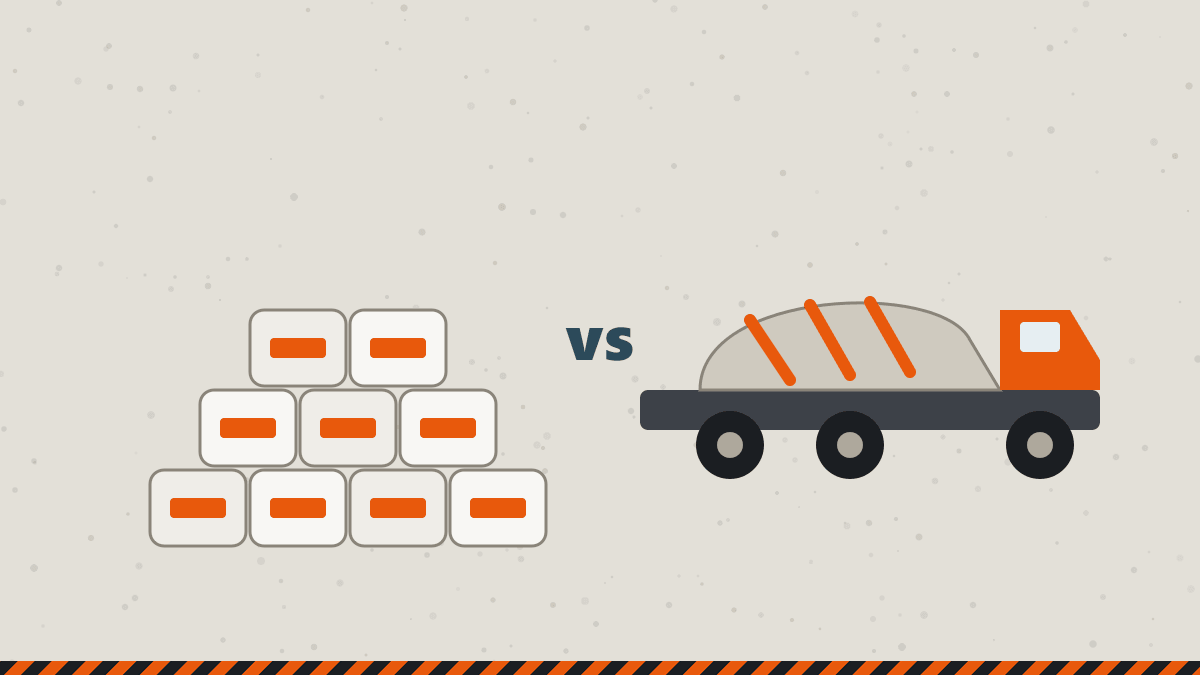
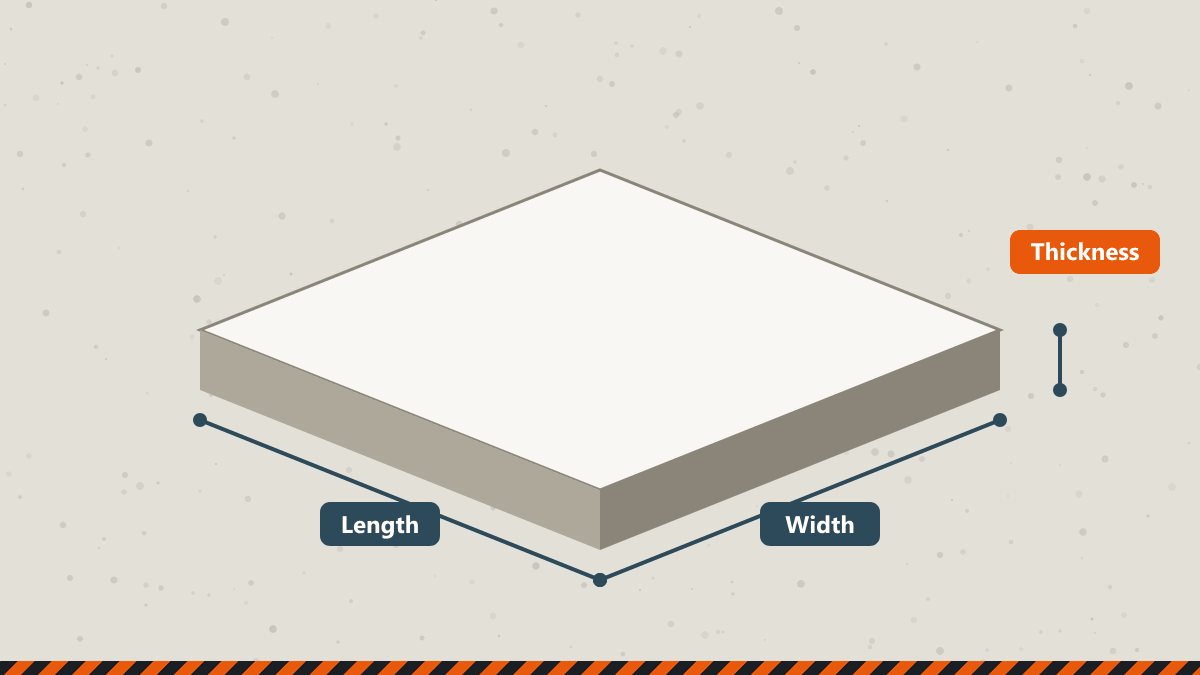
This concrete calculator for ready mix turns a volume into truck loads. Enter cubic yards, cubic meters, or slab dimensions, then set the truck capacity (default 10 yd³). The tool divides the volume by the capacity and rounds up to whole trucks, showing the size of the last load and a 10% waste allowance.
 By Muhammad AsimPublished How we calculate
Your estimate
Total volume with waste
15.40yd³
- Cubic meters
- 11.77 m³
- Cubic feet
- 415.8 ft³
Premixed bags
- 80 lb bags693
- 60 lb bags924
- 40 lb bags1,386
- 25 kg bags1,013
- 20 kg bags1,260
- Weight
- 62,298 lb · 28,258 kg
- Ready-mix truck loads (10 yd³ each)
- 1.54
- Concrete cost
Trucks needed (rounded up)
2
Formula with your numbers
378 ft³ × 1.1 = 415.80 ft³
Includes a 10% waste allowance. Bags are rounded up. Weight uses 2,400 kg/m³ (150 lb/ft³).
Your estimate15.40 yd³ · 693 × 80 lb
Planning several pours or a cost sheet? Get the free Excel template (7 tabs, no sign-up).
How to Use the Ready Mixed Concrete Calculator
To use the ready-mix calculator, follow these 4 steps.
- Enter the volume, or pick Dimensions and measure the pour.
- Set the truck capacity your supplier gives you, in cubic yards or cubic meters.
- Keep 5 to 10 percent for waste; the default is 10 percent.
- Read the truck count and the size of the last load.
Concrete Calculator Ready Mix Formula
The ready-mix formula divides volume ÷ truck capacity and rounds the answer up to a whole truck.
Trucks = volume (yd³) ÷ truck capacity (yd³), rounded up
Last load = volume − (trucks − 1) × capacity
- Volume: the concrete to order in cubic yards (yd³), waste included.
- Truck capacity: the load one concrete mixer truck carries, 10 yd³ by default.
- Last load: the part load on the final truck.
The metric formula uses cubic meters (m³) for the volume and the truck. Ten cubic yards equal 7.65 m³.
Trucks = volume (m³) ÷ truck capacity (m³), rounded up
1 yd³ = 0.7646 m³
Worked Example: 14 Cubic Yards in 10 Yard Trucks
An order of 14 cubic yards (10.70 m³) needs 2 trucks: one full 10 yd³ load and one load of 4 yd³. The 3 steps below show the math.
- Divide by the capacity: 14 ÷ 10 = 1.4.
- Round up to whole trucks: 2 trucks.
- Find the last load: 14 − 1 × 10 = 4 yd³. With 10% waste, the order is 15.4 yd³, still 2 trucks.
Where to Use the Truck Calculator
The truck calculator helps plan 4 typical pours. Each example is 4 inches thick unless noted:
- Garage floors: a 24 × 24 ft floor holds 7.11 yd³, or 1 truck with waste.
- Driveways: a 50 × 16 ft drive at 5 in holds 12.35 yd³, or 2 trucks with waste.
- Basement floors: a 30 × 40 ft floor holds 14.81 yd³, or 2 trucks with waste.
- Small slabs: a 6 × 6 ft pad holds 0.44 yd³, or 22 bags of 80 lb concrete.
What to Tell the Supplier
To order concrete, give the supplier 3 details: the volume, the strength, and the slump.
- Volume: the cubic yards from the calculator, such as 15.4 yd³ for the example.
- Strength: about 3,000 pounds per square inch (psi), or 20 MPa, for patios and paths; about 4,000 psi (28 MPa) for driveways.
- Slump: the measure of workability the supplier asks for. Ask which slump suits the job.
Short-Load Fees
A short-load fee is a charge some suppliers add when a truck carries less than their minimum load. Ask about the fee before you order, since a small last load can trigger it. Enter quoted fees in the cost calculator.
Ready-Mix Trucks by Order Size
A 10 yd³ truck carries 7.65 m³. The table shows trucks and the last load for common orders.
| Order | Cubic meters | Trucks | Last load |
|---|---|---|---|
| 4 yd³ | 3.06 | 1 | 4 yd³ |
| 8 yd³ | 6.12 | 1 | 8 yd³ |
| 12 yd³ | 9.17 | 2 | 2 yd³ |
| 14 yd³ | 10.70 | 2 | 4 yd³ |
| 18 yd³ | 13.76 | 2 | 8 yd³ |
| 25 yd³ | 19.11 | 3 | 5 yd³ |
| 30 yd³ | 22.94 | 3 | 10 yd³ |
| 42 yd³ | 32.11 | 5 | 2 yd³ |
Common Ready-Mix Ordering Mistakes
The 4 most common ordering mistakes are listed below.
- Add waste before you count trucks. The extra 10 percent can push an order onto one more truck.
- Confirm the truck capacity with the supplier. Every fleet differs.
- Use bags for pours under about 1 cubic yard. One yard takes 45 bags of 80 lb concrete.
- State the strength and slump on the order, not only the volume.
Ready Mix Concrete Truck Calculator FAQ
How many concrete trucks do I need for 14 yards?
An order of 14 cubic yards needs 2 trucks at 10 yd³ each. The first truck carries a full 10 yd³ and the second carries 4 yd³. With 10 percent waste added, the order grows to 15.4 yd³ and still fits on 2 trucks.
How much concrete does a truck carry?
The calculator assumes 10 cubic yards (7.65 m³) per truck, a common full load. Truck sizes vary by supplier, so ask for the capacity of the trucks in the fleet. Type that number into the truck capacity box above to update the count.
When are bags better than ready-mix concrete?
Bags are better for pours under about 1 cubic yard, such as post holes, small pads, and repairs. One cubic yard takes 45 bags of 80 lb concrete. Above that size, the bag count passes 45, and a ready-mix truck delivers the whole pour at once.
Does a concrete lorry hold the same as a truck?
Yes, a concrete lorry is the UK name for a concrete mixer truck. UK suppliers quote loads in cubic meters, so switch the truck capacity unit to m³ and enter the load size from the supplier. The calculator divides the volume by that capacity and rounds up the same way.
Sources
Every result on this page uses plain geometry and the exact unit definitions below. The full list of formulas and constants is on the How we calculate page.
Related guides