Concrete Rebar Calculator
This concrete calculator rebar tool counts bars each way as (dimension ÷ spacing) + 1, multiplies by bar length, and converts to weight. Enter the slab in feet or meters, the spacing in inches or centimeters, and pick #3, #4, or #5 bar. The results show total length, number of bars, and weight.
 By Muhammad AsimPublished Updated How we calculate
Your result
- Total rebar length
- 208 ft (63.4 m)
- Number of bars
- 9 bars × 12.0 ft, 10 bars × 10.0 ft
- Weight
- 139 lb (63 kg)
Formula with your numbers
(9 × 12.0 ft + 10 × 10.0 ft) × 0.668 lb/ft = 139 lb
Total rebar length208 ft (63.4 m)
How to Use the Rebar Calculator
To use the rebar calculator, follow these 4 steps.
- Enter the slab length and width.
- Enter the bar spacing from your drawings, local code, or engineer.
- Pick the bar size: #3, #4, or #5.
- Add a waste and overlap percentage, then read the length and weight.
Concrete Calculator Rebar Formula
The rebar formula counts the bars in each direction, multiplies each count by the bar length, and multiplies the total by the weight per foot.
Bars along the length = (width ÷ spacing, rounded up) + 1
Bars along the width = (length ÷ spacing, rounded up) + 1
Total length = bars along L × L + bars along W × W
Weight (lb) = total length (ft) × lb per ft
- L: the slab length, in feet (ft).
- W: the slab width, in feet (ft).
- Spacing: the distance between bar centers, in inches (in).
- lb per ft: 0.376 for #3, 0.668 for #4, and 1.043 for #5 bar.
The metric formula uses meters and centimeters, with weight in kilograms per meter (kg/m). A #4 bar weighs 0.994 kg/m.
Bars each way = (dimension (m) ÷ spacing (m), rounded up) + 1
Weight (kg) = total length (m) × kg per m
Worked Example: Rebar for a 12 × 10 ft Concrete Slab
A 12 × 10 ft slab with #4 bar at 16 in (41 cm) spacing needs 208 ft (63.4 m) of rebar weighing 139 lb (63 kg).
- Count the bars running the 12 ft length: 10 ft ÷ 16 in = 7.5, rounded up to 8, plus 1 = 9 bars.
- Count the bars running the 10 ft width: 12 ft ÷ 16 in = 9 spaces exactly, plus 1 = 10 bars.
- Add the lengths: 9 × 12 ft + 10 × 10 ft = 208 ft (63.4 m).
- Multiply by the weight: (9 × 12.0 ft + 10 × 10.0 ft) × 0.668 lb/ft = 139 lb.
The tool rounds 7.5 spaces up to 8, each a little under 16 in. With 10 percent for waste and overlap, the slab needs 229 ft (69.7 m).
Where to Use the Rebar Calculator
The rebar calculator fits any rectangular slab with a grid of bars:
- Patios: a 16 × 14 ft patio with #4 bar at 18 in takes 344 ft (104.9 m), 230 lb (104 kg).
- Shed slabs: a 10 × 8 ft slab with #3 bar at 12 in takes 178 ft (54.3 m), 67 lb (30 kg).
- Metric slabs: a 4 × 3 m slab with 13 mm bar at 40 cm takes 226 ft (69.0 m), 151 lb (69 kg).
- Material lists: a 12 × 10 ft slab with #5 bar at 16 in takes 217 lb (98 kg), ready for a supplier quote request.
Rebar vs Wire Mesh for a Concrete Slab
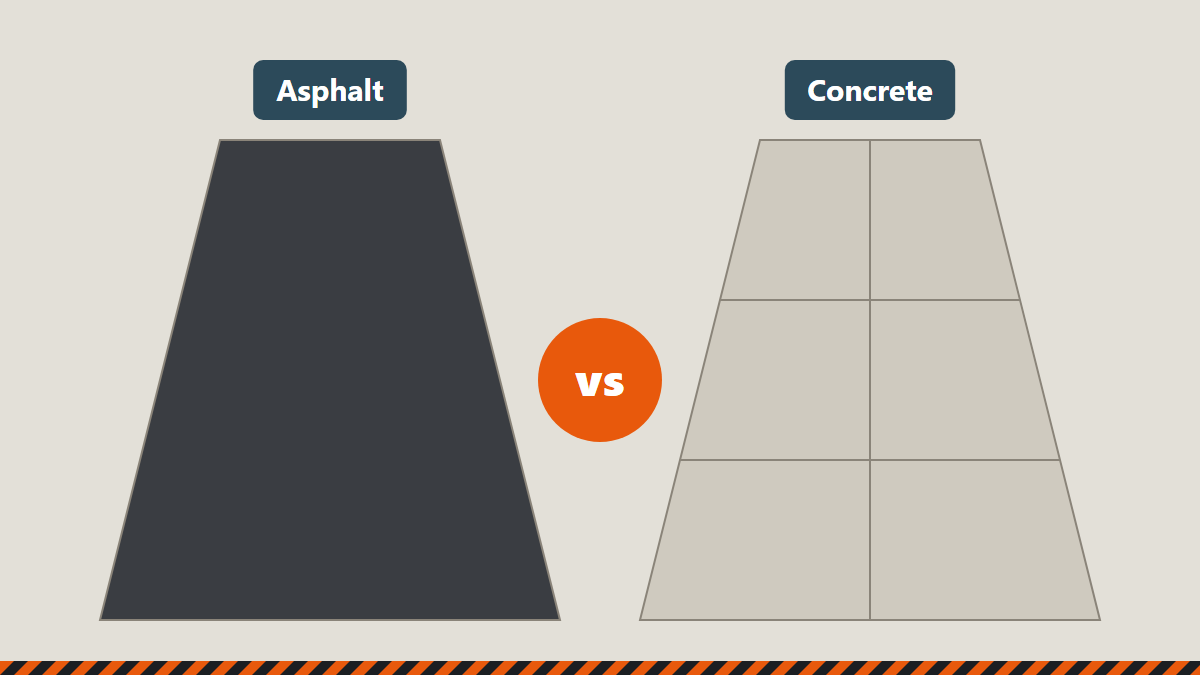
Rebar adds strength to slabs that carry heavy loads, while welded wire mesh mainly holds shrinkage cracks tight in lighter slabs. The plans or the local code decide which one a slab needs:
- Rebar: steel bars tied in a grid and set on chairs. Common in driveways, garage floors, and slabs on weak soil. This calculator counts the bars and the steel weight.
- Wire mesh: welded steel wire sold in sheets or rolls. Common in patios, walkways, and other light-duty slabs. Order it by the slab area plus overlap.
Either one only works when it sits up inside the slab. Set rebar or mesh on chairs before the pour, because steel lying on the ground adds almost nothing to the finished slab.
Installed reinforcement costs about $0.75–$1.50 per square foot for rebar or wire mesh, according to the SlabCalc slab cost guide. For the 12 × 10 ft example slab, that comes to $90 to $180. Add it to the concrete and labor in the concrete slab cost calculator.
Rebar Weight by Bar Size
A #4 bar weighs 0.668 lb per foot. The table lists each size with the example slab weight.
| Bar size | lb per ft | kg per m | Example slab weight |
|---|---|---|---|
| #3 (3/8 in, 10 mm) | 0.376 | 0.560 | 78 lb (35 kg) |
| #4 (1/2 in, 13 mm) | 0.668 | 0.994 | 139 lb (63 kg) |
| #5 (5/8 in, 16 mm) | 1.043 | 1.552 | 217 lb (98 kg) |
Where the Steel Sits in a Slab
The calculator counts bars; placement decides whether they do any work. The 2021 IRC does not require steel in a slab-on-ground, but where it is used, R506.2.4 says it must stay between the center and the upper third of the slab while the concrete is placed.
| Slab thickness | Top of zone (upper third) | Bottom of zone (center) |
|---|---|---|
| 3.5 in (8.9 cm) | 1.17 in | 1.75 in |
| 4 in (10.2 cm) | 1.33 in | 2.00 in |
| 5 in (12.7 cm) | 1.67 in | 2.50 in |
| 6 in (15.2 cm) | 2.00 in | 3.00 in |
- Support bars on chairs with sand plates or on precast concrete bar supports, tied so they do not move during the pour (ACI 302.1R).
- Do not lay wire mesh on the ground and pull it up into the wet concrete, and do not walk it in after placing.
- The 3 in cover in ACI 318 is for concrete cast against earth, such as footings, not the position of slab steel.
Common Rebar Mistakes
Avoid these 4 rebar estimate mistakes.
- Add 1 bar in each direction. A grid always has one more bar than spaces.
- Round the spaces up, not down. Rounding down leaves a gap wider than the spacing.
- Add a percentage for laps and cut-offs, using the lap length from your code or engineer.
- Enter spacing in inches or centimeters, not feet.
Concrete Rebar Calculator FAQ
How do I calculate rebar for a concrete slab?
To calculate rebar, divide each slab dimension by the spacing, round up, add 1, and multiply by the bar length. A 12 × 10 ft slab at 16 in needs 9 bars 12 ft long and 10 bars 10 ft long, for 208 ft (63.4 m) in total. Multiply by the weight per foot for pounds.
How much does rebar weigh per foot?
Rebar weighs 0.376 lb per foot for #3, 0.668 lb for #4, and 1.043 lb for #5. In metric terms, those weights equal 0.560, 0.994, and 1.552 kg per meter. Multiply the total length by the weight per foot to find the order weight.
Why does the calculator add 1 bar each way?
The calculator adds 1 bar because a grid always has one more bar than spaces. Dividing 10 ft by 16 in gives the number of spaces between bars. A bar sits at each end of every space, so the bar count is the space count plus 1, after rounding the spaces up.
Does a concrete calculator with rebar choose the bar size?
No, the calculator does not choose bar size or spacing. Bar size, spacing, and lap length depend on local code and your engineer, based on the slab load and soil. Enter the values from your drawings, and the tool returns the bar count, total length, and weight to buy.
Where should rebar go in a concrete slab?
Keep slab rebar between the center and the upper third of the slab, held on chairs or concrete bar supports. In a 4 inch slab that is 1.33 to 2.00 inches below the surface. The 2021 IRC sets this zone in R506.2.4, and spacing comes from your drawings.
Sources
Bar lengths and weights use plain geometry and standard bar weights. The placement rules come from the documents below.
- International Residential Code 2021, R506 and R507.3 (Seattle Residential Code 2021, Chapter 5)
- ACI 302.1R-15, Chapter 5 – reinforcement support in slabs-on-ground
- ACI – FAQ on 3 in cover for concrete cast against ground (ACI 318-19 Table 20.5.1.3.1)
- Rebar weights per foot (CRSI table, Weyerhaeuser SBP-4100)
- NIST – Unit conversion: SI to U.S. customary units
- How we calculate – formulas, constants, and sources
Related guides