Concrete Calculator NZ
This concrete calculator NZ page works in meters and millimeters, the units on New Zealand plans. It finds length × width × depth for each part of the pour, adds the parts, and allows for waste. The results give cubic meters (m³) first, then cubic yards, cubic feet, 20, 25, and 30 kg bag counts, and weight.
 By Muhammad AsimPublished How we calculate
Your estimate
Total volume with waste
1.32m³
- Cubic yards
- 1.73 yd³
- Cubic feet
- 46.6 ft³
Premixed bags
- 20 kg bags142
- 25 kg bags114
- 30 kg bags94
- Weight
- 3,168 kg · 6,984 lb
- Ready-mix truck loads (10 yd³ each)
- 0.17
- Concrete cost
Volume by shape
Formula with your numbers
4 m × 3 m × 0.1 m × 1.1 = 1.320 m³
Includes a 10% waste allowance. Bags are rounded up. Weight uses 2,400 kg/m³ (150 lb/ft³).
Your estimate1.32 m³ · 142 × 20 kg
How to Use the Concrete Volume Calculator in NZ
To use the concrete volume calculator in NZ, follow these 4 steps.
- Select the shape of the pour, such as a pad, footing, or post hole.
- Enter the sizes and pick m, cm, or mm for each field.
- Add another part for each separate pour on the same job.
- Keep 10% waste and read the m³ total and the bag counts.
Concrete Calculator NZ Formula
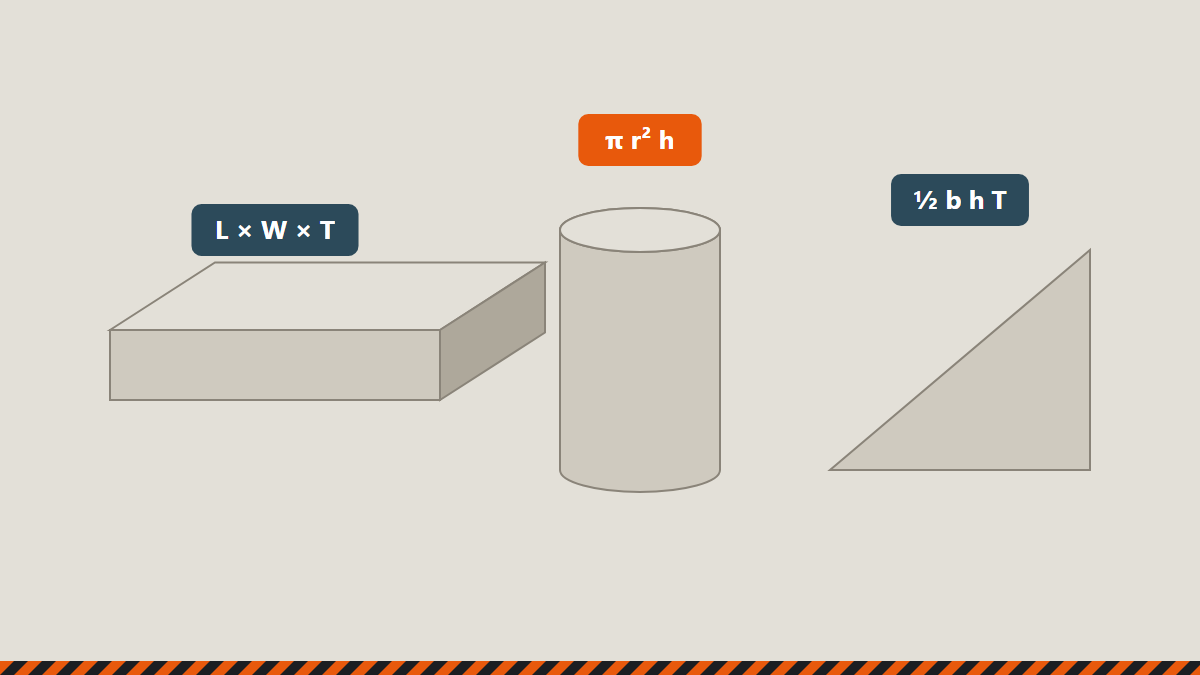
The concrete calculator NZ formula is length × width × depth, all in meters. The answer is in cubic meters, the unit New Zealand ready-mix plants use.
Volume (m³) = length (m) × width (m) × depth (m)
Depth (m) = depth (mm) ÷ 1,000
- Length and width: the plan sizes of the pour in meters (m).
- Depth: the thickness in millimeters (mm), divided by 1,000.
The imperial version works in feet and divides by 27 to give cubic yards (yd³).
Volume (yd³) = length (ft) × width (ft) × depth (ft) ÷ 27
1 m³ = 1.308 yd³
Worked Example: 5 × 2.5 m Pad at 100 mm
A 5 × 2.5 m pad at 100 mm (4 in) deep holds 1.25 m³ (1.63 yd³) of concrete before waste.
- Turn the depth into meters: 100 mm ÷ 1,000 = 0.1 m.
- Multiply the 3 sizes: 5 × 2.5 × 0.1 = 1.25 m³.
- Add 10% for waste: 1.25 × 1.1 = 1.38 m³ (1.80 yd³).
- Count the bags: 1.38 m³ takes 119 bags of 25 kg, 148 bags of 20 kg, or 98 bags of 30 kg.
Where to Use the Calculator in New Zealand
The calculator suits 5 jobs around a New Zealand home:
- Carport pads: 6 × 3 m at 100 mm takes 1.80 m³.
- Garden paths: 10 × 1 m at 75 mm takes 81 bags of 20 kg.
- Strip footings: 10 m long, 300 mm wide, and 300 mm deep takes 0.90 m³.
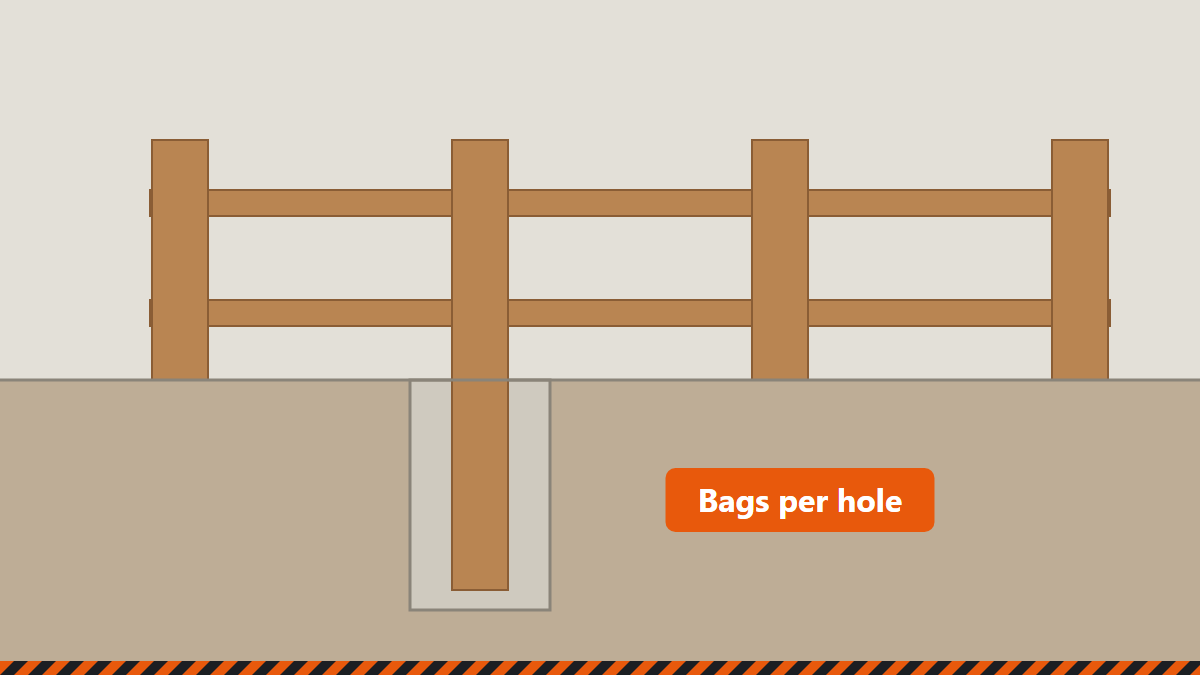
- Fence posts: 8 holes, 200 mm wide and 600 mm deep, take 17 bags of 20 kg.
- Front steps: 3 steps, 1 m wide with 300 mm treads and 170 mm risers, take 0.15 m³.
Bagged Concrete or Ready-Mix in New Zealand
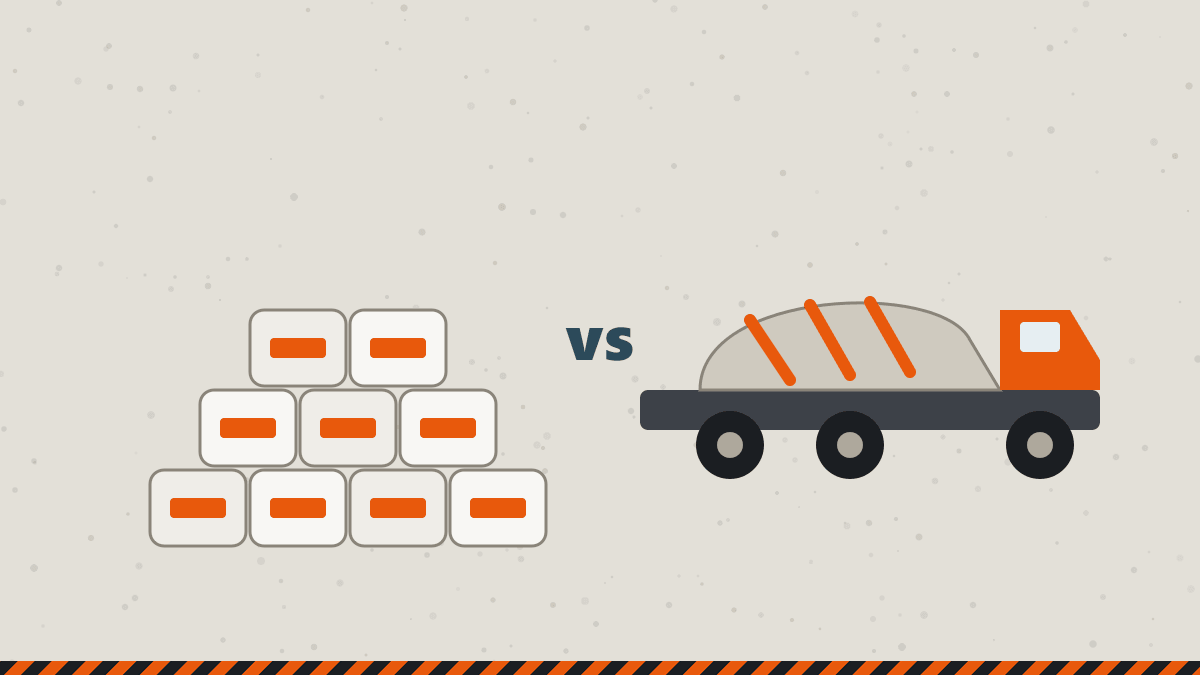
Bagged concrete suits small pours, and ready-mix suits larger ones. One cubic meter of concrete takes about 107 bags of 20 kg, New Zealand ready-mix plants quote by the cubic meter, so get supplier quotes with the m³ total from the calculator.
Concrete for Sample Jobs
A 6 × 3 m carport pad at 100 mm needs 1.80 m³ (2.35 yd³), the largest volume in the table.
| Job | Cubic meters | Cubic yards | 20 kg bags | 25 kg bags | 30 kg bags |
|---|---|---|---|---|---|
| Carport pad, 6 × 3 m at 100 mm | 1.80 | 2.35 | 193 | 155 | 128 |
| Garden path, 10 × 1 m at 75 mm | 0.75 | 0.98 | 81 | 65 | 54 |
| Strip footing, 10 m × 300 × 300 mm | 0.90 | 1.18 | 97 | 78 | 64 |
| Round pad, 2 m across at 100 mm | 0.31 | 0.41 | 34 | 28 | 23 |
| 8 post holes, 200 mm × 600 mm | 0.15 | 0.20 | 17 | 13 | 11 |
Common Mistakes With Metric Pours
These 4 mistakes cause most short or wasted orders.
- Picking the wrong unit. A depth typed as 100 m instead of 100 mm gives a total 1,000 times too large.
- Guessing the depth. The 5 × 2.5 m pad at 90 mm holds 1.13 m³, not 1.25 m³, so measure at several points.
- Leaving out the waste allowance. Add 5 to 10 percent, and use 10 percent on soft or uneven ground.
- Counting one post hole. Multiply the single-hole volume by the number of holes.
Concrete Calculator NZ FAQ
How many 20 kg bags of concrete make 1 m³ in NZ?
About 107 bags of 20 kg premixed concrete make 1 cubic meter (1.308 yd³). The same cubic meter takes about 86 bags of 25 kg or 71 bags of 30 kg. Yields differ between products, so check the bag label and round up to a whole bag.
How much concrete do I need for a 4 × 4 m pad?
A 4 × 4 m pad at 100 mm (4 in) deep needs 1.60 m³ of concrete (2.09 yd³) before waste. With 10 percent added, plan for 1.76 m³. In bags, that total equals 189 bags of 20 kg or 125 bags of 30 kg, rounded up.
Does the concrete volume calculator for NZ show cubic meters?
Yes, the concrete volume calculator shows cubic meters as the main result on this page. Cubic yards and cubic feet appear below the m³ total for anyone working from imperial plans. Every result includes the waste allowance you set, and bag counts are rounded up to whole bags.
How thick should a concrete pad be in New Zealand?
The right thickness comes from your plans, the local council, or a structural engineer. The calculator does not set thickness for you. Enter the depth from the drawings in millimeters, and measure the prepared base at several points before the pour so the volume matches the real depth.
Sources
Every result on this page uses plain geometry and the exact unit definitions below. The full list of formulas and constants is on the How we calculate page.
Related guides