Shed Base Concrete Calculator
This how much concrete for shed base calculator finds the volume of a flat concrete pad under a shed. Tap a common shed size or enter the length, width, and thickness. The results list cubic yards, cubic feet, cubic meters, and the number of bags for the base, with a 10% waste allowance built in.
 By Muhammad AsimPublished Updated How we calculate
Your estimate
Total volume with waste
1.09yd³
- Cubic meters
- 0.83 m³
- Cubic feet
- 29.3 ft³
Premixed bags
- 80 lb bags49
- 60 lb bags66
- 40 lb bags98
- 25 kg bags72
- 20 kg bags89
- Weight
- 4,395 lb · 1,994 kg
- Ready-mix truck loads (10 yd³ each)
- 0.11
- Concrete cost
Formula with your numbers
10 ft × 8 ft × 0.333 ft × 1.1 = 29.33 ft³
Includes a 10% waste allowance. Bags are rounded up. Weight uses 2,400 kg/m³ (150 lb/ft³).
Your estimate1.09 yd³ · 49 × 80 lb
Planning several pours or a cost sheet? Get the free Excel template (7 tabs, no sign-up).
How Much Concrete for a Shed Base: Calculator Steps
To find how much concrete a shed base takes, complete these 3 steps.
- Tap the shed size that matches the floor plan, or type the length and width of the pad.
- Set the pad thickness. The default is 4 inches (10 cm).
- Read the cubic yards and bag counts.
Shed Base Concrete Formula
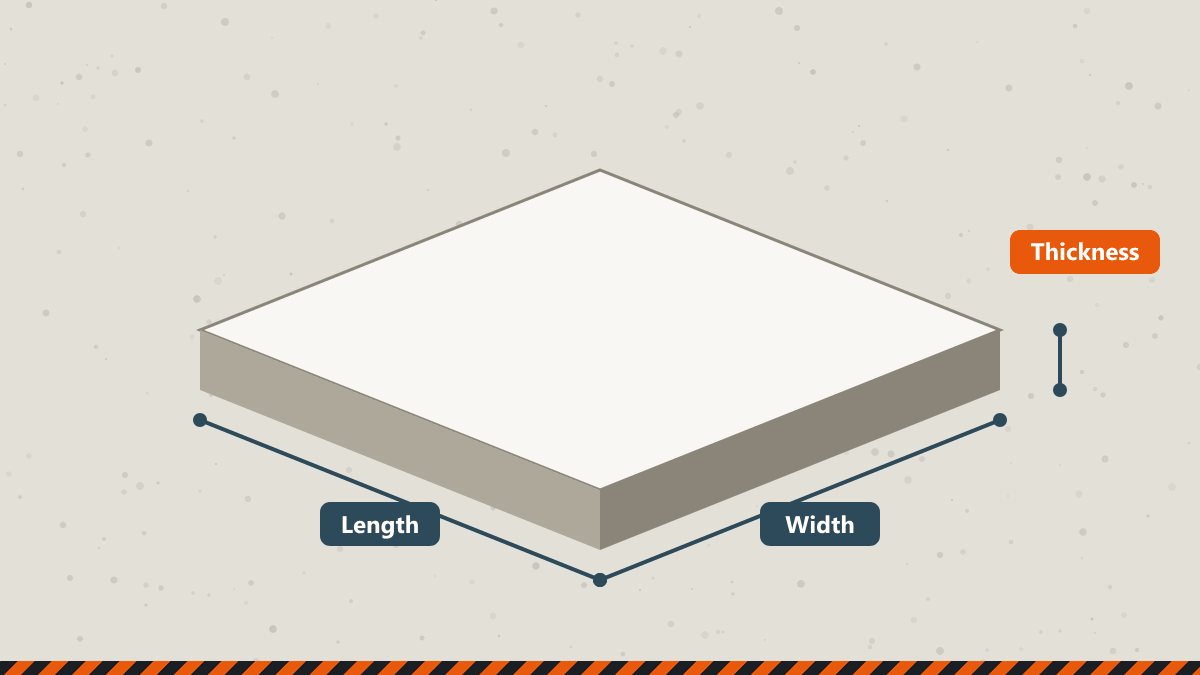
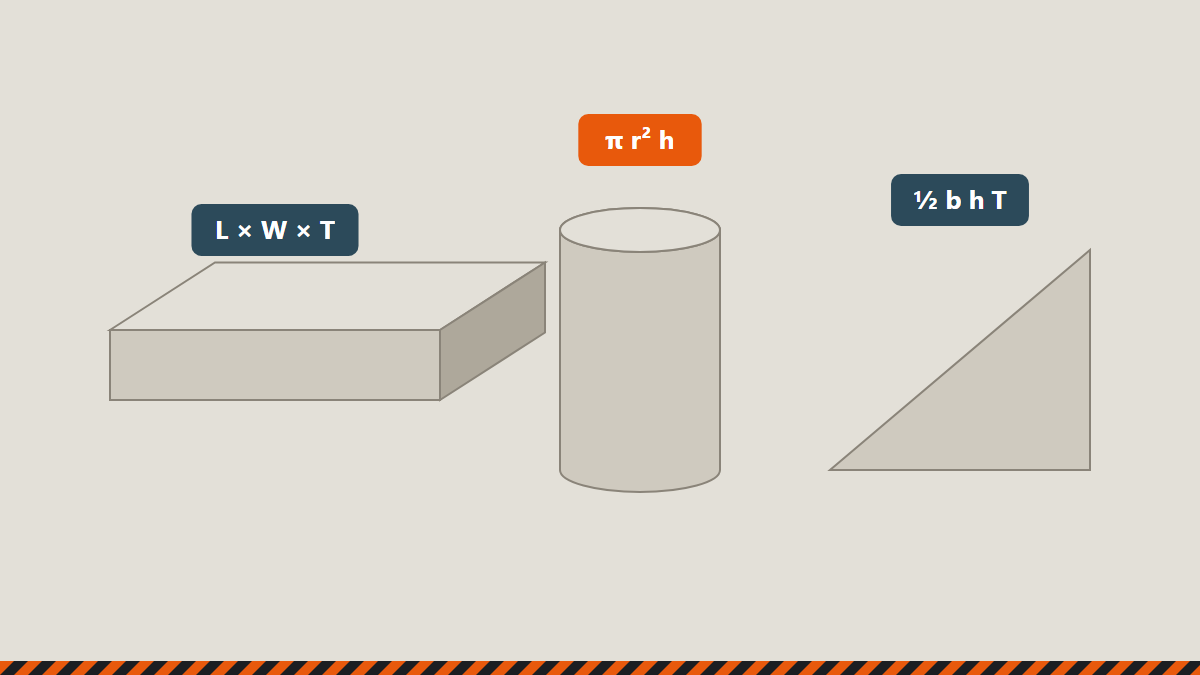
A shed base is a rectangle, so the volume equals length × width × thickness, with the thickness converted to feet.
Volume (ft³) = length (ft) × width (ft) × (thickness (in) ÷ 12)
Cubic yards (yd³) = volume (ft³) ÷ 27
- Length: the long side of the pad, in feet (ft).
- Width: the short side of the pad, in feet.
- Thickness: the pad depth in inches (in).
- 27: cubic feet in 1 cubic yard.
For a metric shed base, multiply meters by meters by the thickness in meters to get cubic meters (m³).
Volume (m³) = length (m) × width (m) × thickness (m)
1 m³ = 1.308 yd³ = 35.3 ft³
Worked Example: 8 × 10 ft Shed Base at 4 Inches
An 8 × 10 ft (2.44 × 3.05 m) shed base poured 4 inches thick needs 26.7 cubic feet, or 0.99 cubic yards (0.76 m³). Follow the 4 steps below.
- Turn the thickness into feet: 4 ÷ 12 = 0.333 ft.
- Multiply the 3 dimensions: 10 × 8 × 0.333 = 26.7 ft³.
- Divide by 27: 26.7 ÷ 27 = 0.99 yd³.
- Add 10% and count bags: 29.3 ft³ needs 49 bags of 80 lb concrete or 66 bags of 60 lb concrete.
Try it
Drag the sliders and the diagram redraws to scale.
Linked to the calculator above: moving a slider updates your estimate.
With your values
10 ft × 8 ft × 0.333 ft = 26.67 ft³
- Cubic feet
- 26.67
- Cubic yards
- 0.99
- Cubic meters
- 0.76
Where to Use the Shed Base Calculator
The shed base calculator works for any small building that sits on a flat pad. Sample pads at 4 inches, before waste:
- Trash bin pads: 4 × 6 ft takes 8.00 ft³, or 14 bags of 80 lb concrete.
- Bike sheds: 6 × 8 ft takes 0.59 yd³ (0.45 m³).
- Garden workshops: 12 × 16 ft takes 2.37 yd³ (1.81 m³).
Slab Base vs Pier Foundation for a Shed
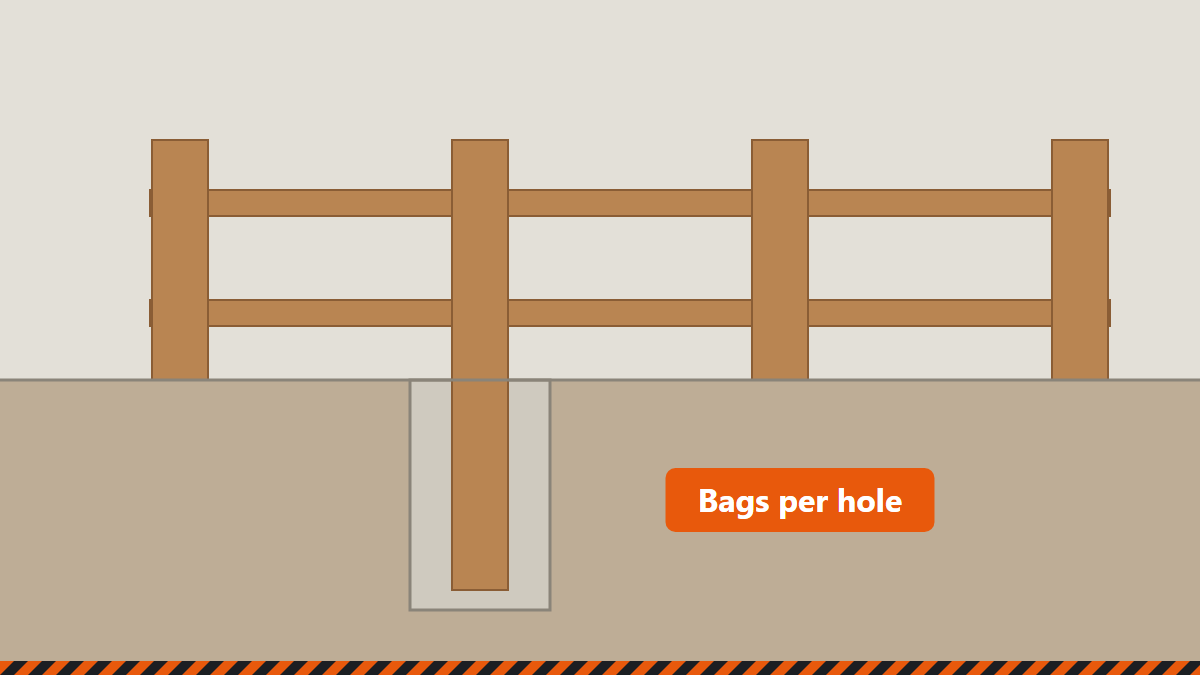
A pier foundation uses less concrete than a full slab but leaves the shed floor framed in wood. For example, 6 piers at 10 in (25 cm) × 3 ft hold 9.82 ft³, against 26.7 ft³ for an 8 × 10 ft slab at 4 in.
Pier count, depth, and spacing come from local codes and the soil. Count the pier concrete with the pier calculator.
Adding a Concrete Ramp at the Shed Door
A ramp lets a mower or wheelbarrow roll in, and it can be poured with the base. The ramp is a wedge: ½ × length × rise × width. A ramp 4 ft wide and 3 ft long that climbs the 4 in base holds 2.00 ft³, or 4 bags of 80 lb concrete with waste. The 8 × 10 ft base and that ramp together take 53 bags. For a longer or steeper ramp, use the ramp calculator.
| Ramp width | Rise 4 in (ft³) | 80 lb bags, 4 in rise | Rise 6 in (ft³) | 80 lb bags, 6 in rise |
|---|---|---|---|---|
| 3 ft (0.91 m) | 1.50 | 3 | 2.25 | 5 |
| 4 ft (1.22 m) | 2.00 | 4 | 3.00 | 6 |
| 5 ft (1.52 m) | 2.50 | 5 | 3.75 | 7 |
| 6 ft (1.83 m) | 3.00 | 6 | 4.50 | 9 |
Concrete for Common Shed Sizes
A 12 × 16 ft shed base takes 4 times the concrete of a 6 × 8 ft base at the same thickness.
| Shed size | Cubic feet | Cubic yards | Cubic meters | 80 lb bags | 80 lb bags + 10% |
|---|---|---|---|---|---|
| 6 × 8 ft (1.83 × 2.44 m) | 16.0 | 0.59 | 0.45 | 27 | 30 |
| 8 × 10 ft (2.44 × 3.05 m) | 26.7 | 0.99 | 0.76 | 45 | 49 |
| 10 × 12 ft (3.05 × 3.66 m) | 40.0 | 1.48 | 1.13 | 67 | 74 |
| 12 × 16 ft (3.66 × 4.88 m) | 64.0 | 2.37 | 1.81 | 107 | 118 |
Common Shed Base Mistakes
The 3 most common shed base mistakes involve the pad size, the thickness, and the gravel layer.
- Size the pad from the shed footprint, not the roof. Adding 6 in on every side of an 8 × 10 ft base raises the volume from 0.99 to 1.22 yd³.
- Confirm the thickness before you buy bags. A 6 in pad of the same size takes 1.48 yd³, half again as much as 4 in.
- Order the gravel layer under the pad as a separate material. The calculator counts concrete only.
Shed Base Concrete Calculator FAQ
How much concrete do I need for an 8 × 10 shed base?
An 8 × 10 ft shed base at 4 inches thick needs 0.99 cubic yards (26.7 ft³) of concrete. With 10 percent waste, buy 49 bags of 80 lb concrete or order 1.09 yd³ of ready-mix. Tap a different shed size above to see other pads.
How thick should a concrete shed base be?
A concrete shed base is usually 4 inches (10 cm) thick for garden sheds and storage buildings. For heavy loads, such as a riding mower or shop machines, follow local codes or a structural engineer. Check whether the shed needs a permit, then enter the approved thickness above.
How many bags of concrete do I need for a 10 × 12 shed base?
A 10 × 12 ft shed base at 4 inches needs 67 bags of 80 lb concrete, before waste, or 74 bags with 10 percent added. The pad holds 1.48 cubic yards (1.13 m³). At that size, a ready-mix load saves a lot of mixing.
Is a slab better than piers for a shed?
No, a slab is not always better than piers for a shed. A slab gives a solid floor at ground level, while piers use less concrete and suit sloped yards. The right choice depends on the shed, the site, and local codes. Count both options with this page and the pier calculator.
How much concrete do I need for a shed ramp?
A shed ramp 4 feet wide and 3 feet long that rises 4 inches holds 2.00 cubic feet, which is 4 bags of 80 lb concrete with 10 percent waste. The ramp is half of a box, so multiply length × rise × width and halve it. A 6 inch rise needs half as much again.
Sources
Every result on this page uses plain geometry and the exact unit definitions below. The full list of formulas and constants is on the How we calculate page.
Related guides