Concrete Bag Calculator
This concrete calculator counts bags for any job. Enter a volume in cubic yards, cubic feet, or cubic meters, or switch to dimensions. The tool divides the volume by each bag's yield and rounds up, so the results show whole bags for 7 sizes: 40, 50, 60, and 80 lb plus 20, 25, and 30 kg.
 By Muhammad AsimPublished How we calculate
Your estimate
Total volume with waste
1.10yd³
- Cubic meters
- 0.84 m³
- Cubic feet
- 29.7 ft³
Premixed bags
- 80 lb bags50
- 60 lb bags66
- 50 lb bags80
- 40 lb bags99
- 30 kg bags60
- 25 kg bags73
- 20 kg bags90
- Weight
- 4,450 lb · 2,018 kg
- Ready-mix truck loads (10 yd³ each)
- 0.11
- Concrete cost
Formula with your numbers
27 ft³ × 1.1 = 29.70 ft³
Includes a 10% waste allowance. Bags are rounded up. Weight uses 2,400 kg/m³ (150 lb/ft³).
Your estimate1.10 yd³ · 50 × 80 lb
Planning several pours or a cost sheet? Get the free Excel template (7 tabs, no sign-up).
How to Use the Concrete Calculator for Bags
To use the concrete calculator for bags, follow these 4 steps.
- Choose Volume when you know the cubic yards, or Dimensions to measure a slab.
- Enter the numbers and pick the unit beside each field.
- Keep the 10 percent waste allowance, or set your own value.
- Read the bag count for every size in the results and compare the totals.
Concrete Bag Formula
The concrete bag formula divides the volume in cubic feet by the yield of one bag, then rounds up to a whole bag. Any brand's bag label lists its yield.
Bags = volume (ft³) ÷ bag yield (ft³), rounded up
Volume (ft³) = cubic yards × 27
- 80 lb bag: yields 0.60 ft³.
- 60 lb bag: yields 0.45 ft³.
- 50 lb bag: yields 0.375 ft³.
- 40 lb bag: yields 0.30 ft³.
The metric bag formula multiplies the volume in cubic meters by the number of bags per m³. A cubic meter takes about 107 bags of 20 kg, 86 bags of 25 kg, or 71 bags of 30 kg.
Bags = volume (m³) × bags per m³, rounded up
20 kg: 107 per m³ · 25 kg: 86 per m³ · 30 kg: 71 per m³
Worked Example: Bags for 1 Cubic Yard
One cubic yard (0.76 m³) of concrete takes 45 bags of 80 lb or 60 bags of 60 lb, before waste. The 4 steps below show the count.
- Convert to cubic feet: 1 yd³ × 27 = 27 ft³.
- Divide by the 80 lb yield: 27 ÷ 0.60 = 45 bags.
- Add 10 percent for waste: 27 × 1.1 = 29.7 ft³.
- Divide again and round up: 29.7 ÷ 0.60 = 50 bags of 80 lb (99 bags of 40 lb).
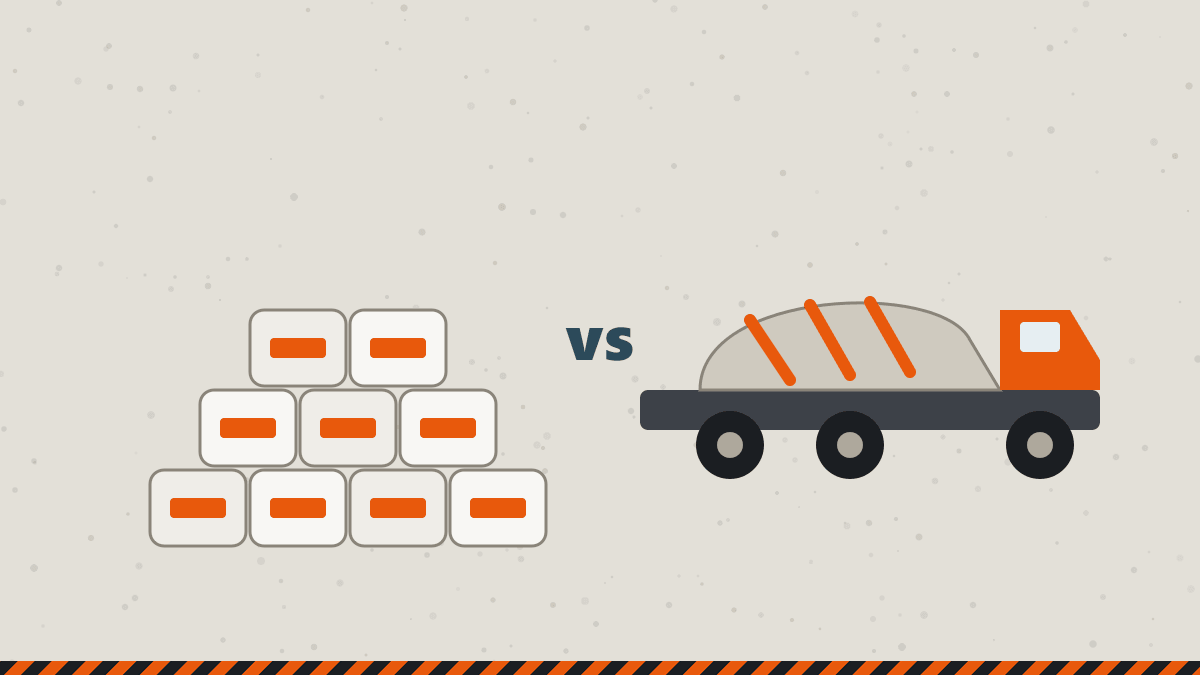
Ready-mix concrete is usually the better choice above about 1 cubic yard, because 1 cubic yard already means 45 bags of 80 lb to lift and mix.
Bag counter
4-inch slab presets
Bags needed
56
Above about 1 yd³, ready-mix from a concrete mixer truck is usually more practical.
Where to Use Bagged Concrete
Bagged concrete fits small pours under about 1 cubic yard. These 3 jobs show 80 lb bag counts before waste:
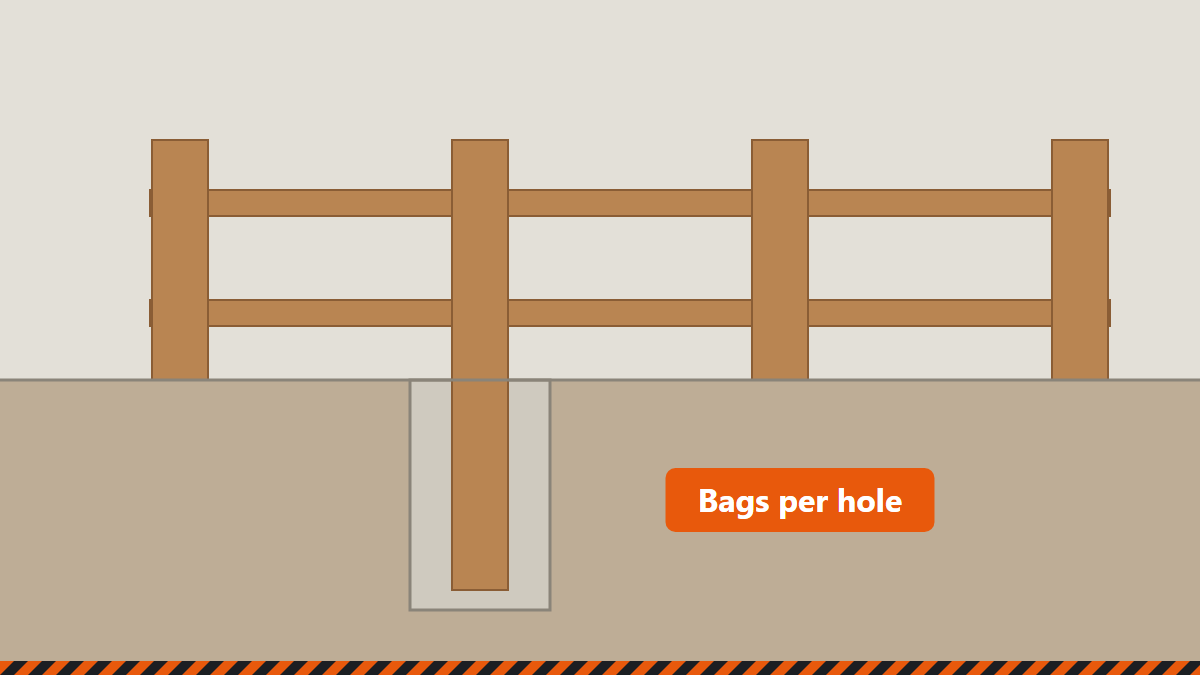
- Fence posts: 8 post holes 10 in wide and 3 ft deep take 22 bags of 80 lb.
- Equipment pads: a 4 × 4 ft pad at 4 in takes 9 bags of 80 lb (5.3 ft³).
- Landing slabs: a 6 × 3 ft landing at 4 in takes 10 bags of 80 lb.
How Many Bags of Concrete Do I Need for a Slab?
A 10 × 10 ft slab at 4 inches (10 cm) takes 56 bags of 80 lb, 75 bags of 60 lb, or 112 bags of 40 lb concrete, before waste. The slab holds 33.3 cubic feet (0.94 m³), and each count is that volume divided by the bag yield, rounded up.
To count bags for any slab, follow 3 steps:
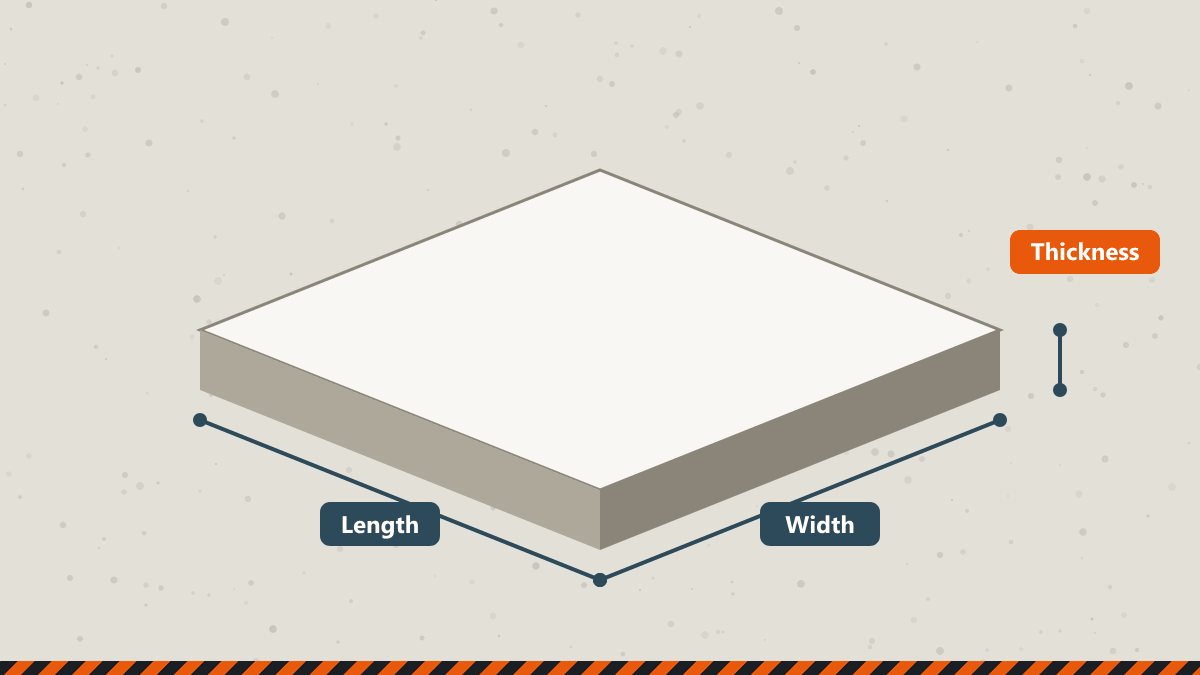
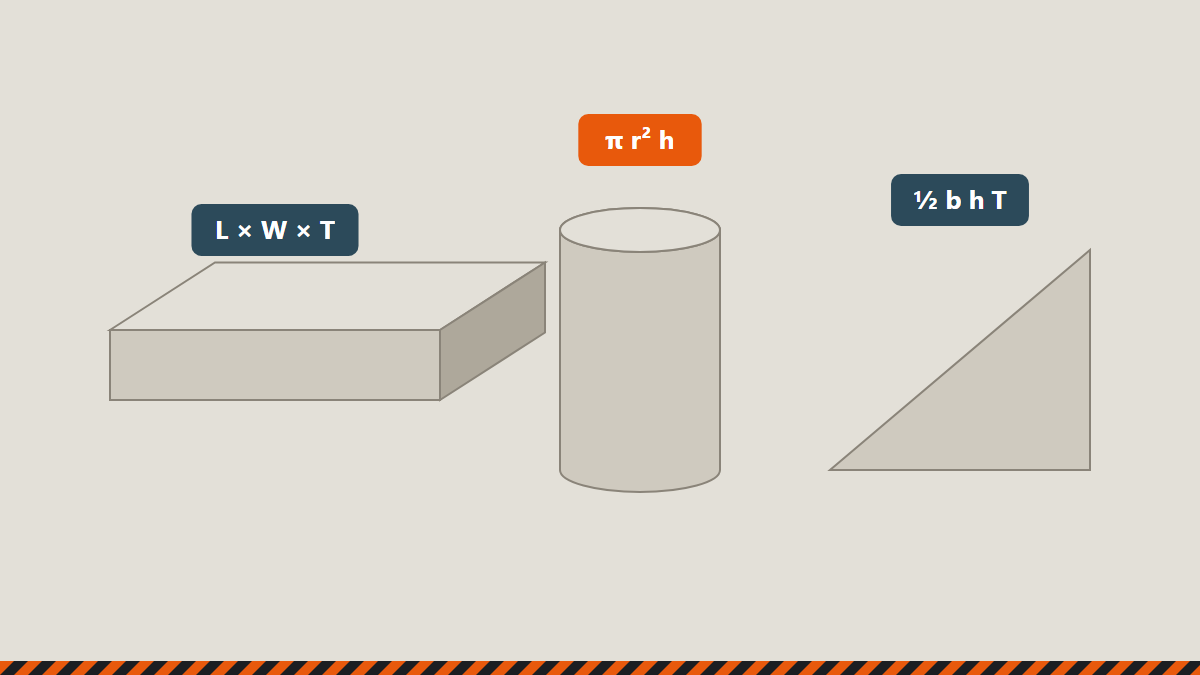
- Multiply length × width × thickness in feet to get cubic feet. Divide the thickness in inches by 12 first.
- Add 10 percent for waste by multiplying the cubic feet by 1.1.
- Divide by the bag yield (0.60 ft³ for 80 lb, 0.45 ft³ for 60 lb, 0.30 ft³ for 40 lb) and round up.
With waste, the same slab takes 62 bags of 80 lb or 123 bags of 40 lb. That is 4,960 lb of dry mix to carry and mix. At 1.23 yd³, the slab is past the 1 cubic yard point where ready-mix concrete is usually the better choice.
Bags of Concrete for a 4-Inch Slab
A 12 × 12 ft slab at 4 inches (10 cm) takes 80 bags of 80 lb before waste. The chart lists 6 slab sizes for all 4 pound bag sizes.
| Slab size | Cubic feet | 80 lb bags | 60 lb bags | 50 lb bags | 40 lb bags |
|---|---|---|---|---|---|
| 4 × 4 ft | 5.3 | 9 | 12 | 15 | 18 |
| 6 × 6 ft | 12.0 | 20 | 27 | 32 | 40 |
| 8 × 8 ft | 21.3 | 36 | 48 | 57 | 72 |
| 10 × 10 ft | 33.3 | 56 | 75 | 89 | 112 |
| 10 × 12 ft | 40.0 | 67 | 89 | 107 | 134 |
| 12 × 12 ft | 48.0 | 80 | 107 | 128 | 160 |
Common Bag Count Mistakes
The 4 most common bag count mistakes involve rounding, yield, waste, and the job size.
- Round every count up. A result of 44.2 bags means 45 bags, never 44.
- Use the yield printed on the bag. Bag weight alone does not give the volume, and mixes differ.
- Add 5 to 10 percent for waste before you count. Spillage and uneven ground use concrete that the plan does not show.
- Check the job size first. Half a cubic yard (0.38 m³) already takes 23 bags of 80 lb.
Concrete Bag Calculator FAQ
How many bags of concrete do I need for 1 yard?
One cubic yard of concrete needs 45 bags of 80 lb, 60 bags of 60 lb, 72 bags of 50 lb, or 90 bags of 40 lb. The counts come from 27 cubic feet divided by each bag's yield. Add 10 percent for waste, and the 80 lb count rises to 50 bags.
How many bags of concrete do I need for a 10×10 slab?
A 10×10 ft slab at 4 inches holds 33.3 cubic feet. With 10 percent waste it takes 62 bags of 80 lb, 82 of 60 lb, 98 of 50 lb, or 123 of 40 lb concrete. Every size gives the same concrete per pound, so pick the bag your crew can lift, then compare the total with a ready-mix quote.
Does the calculator work for 90 lb bags?
No, the calculator has no preset for 90 lb bags. Read the yield in cubic feet printed on the bag, then divide the cubic feet result by that yield and round up. Any brand's bag label lists its yield, so the same formula works for every bag size and mix.
How many bags of concrete are in 1 m³?
One cubic meter takes about 107 bags of 20 kg, 86 bags of 25 kg, or 71 bags of 30 kg concrete. In pound sizes, the same cubic meter equals 59 bags of 80 lb. Enter the volume in m³ and the calculator shows every size at once.
When is ready-mix better than bags?
Ready-mix concrete is usually the better choice above about 1 cubic yard (0.76 m³). At that size a job needs 45 or more 80-pound bags, and every bag is mixed by hand or in a small mixer. A concrete mixer truck delivers the full volume at once, so the pour goes in as one batch.
Sources
Every result on this page uses plain geometry and the exact unit definitions below. The full list of formulas and constants is on the How we calculate page.
Related guides