
GuidesBy Concrete Calculator Team
How to Calculate Concrete for a Slab
A step-by-step method for working out cubic yards and bags for any rectangular slab, with a worked example and the mistakes that lead to short orders.
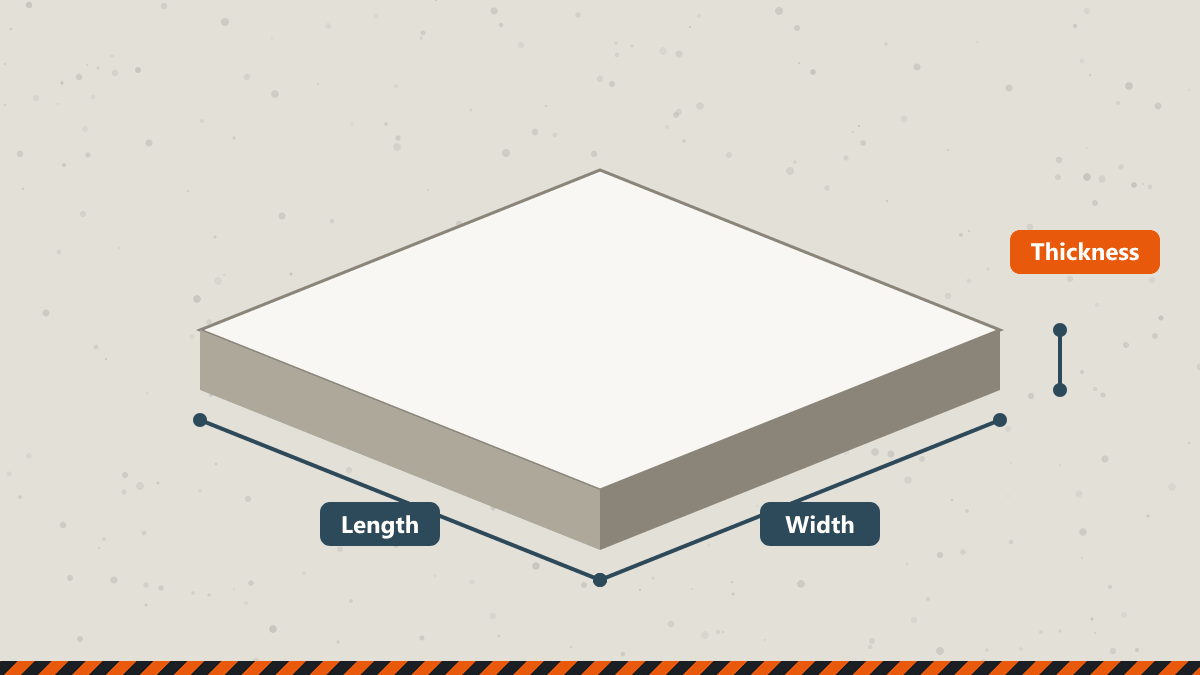
A slab is the simplest shape to estimate, which is exactly why small errors slip through. This guide walks through the calculation the same way the calculator does it, so you can check any quote by hand.
1. Measure in one unit
Measure the length and width in feet and the thickness in inches. Before you multiply anything, convert the thickness to feet by dividing by 12:
| Thickness | In feet |
|---|---|
| 4 in | 0.333 |
| 5 in | 0.417 |
| 6 in | 0.5 |
2. Multiply to get cubic feet
Volume (ft³) = length × width × thickness
For a 12 × 10 ft patio at 4 inches: 12 × 10 × 0.333 = 40 cubic feet.
3. Convert to cubic yards
Ready-mix is sold by the cubic yard, and a cubic yard holds 27 cubic feet:
40 ÷ 27 = 1.48 cubic yards
4. Add waste
Subgrade is never perfectly flat, and forms bow slightly under load. Add 5–10%:
1.48 × 1.10 = 1.63 cubic yards
5. Convert to bags (for small pours)
An 80 lb bag yields about 0.60 cubic feet. With waste included, 40 × 1.10 = 44 ft³, and 44 ÷ 0.60 = 74 bags. At that size, ready-mix is usually the better choice.
Common mistakes
- Mixing inches and feet. Multiplying 12 × 10 × 4 gives 480, which is 12 times too much.
- Ignoring thickened edges. Slabs with turned-down edges or footings need those volumes added separately.
- Forgetting the gravel base. Base material reduces the slab depth only if you plan for it; measure from the top of the base.